

If you've ever faced the task of removing large amounts of water, you know how useful and indispensable a good water pump is. The following also describes the introduction of electric water pump, I hope to help you.
Electric water pump
As the name suggests, electric submersible pumps require an electric motor - running directly from a power source - to power the pump. This also means that when you choose an electric motor, you have to make sure it can handle the horsepower needed to run the pump. A quick calculation for this is that rating for each motor requires about twice the horsepower inrush current to turn the pump properly.
For example, if your pump needs 65 power to operate at optimum efficiency, you need a power supply with twice its normal operating capacity to handle all inrush and start-up needs. It is important to remember that most electric wanna 'snot operates under water. For this reason, they are usually limited to powering impeller or sewer by pass pumps, and the motor never needs to be submerged.
There are specially designed submersible motors to run larger electric suber pumps sable, but they are very expensive.
PTO submersible pump
The power take-off pump works - by trans efficiently transmitting mechanical power from a remote engine. In other words, once the PTO connection is made the engine of the commercial vehicle - either by using the hydraulic system PTO pump on a mechanical loader or any equipment with a hydraulic tap it is ready to use.
Also, unlike the math involved in calculating enough power for an electric pump, if your power take-off 65 needs take-off pump to run efficiently, you only need a 65 hp motor to know it.
PTO pumps are easier to match. Plus, you don't have to worry about pump motor.
Electricity supply
If you choose an electric pump, you obviously some electricity everywhere. This means you need an outlet or a generator to provide the necessary power. Of course, you can choose to use long cables, but energy bills can add up quickly. Depending on the scale of the pumping job in front of you, this option may not be cheap.
The dual benefit of a power take-off pump is that it can move around the job-site with you, and can use the power provided by whatever engine you connect to it continuously and cost-effectively.
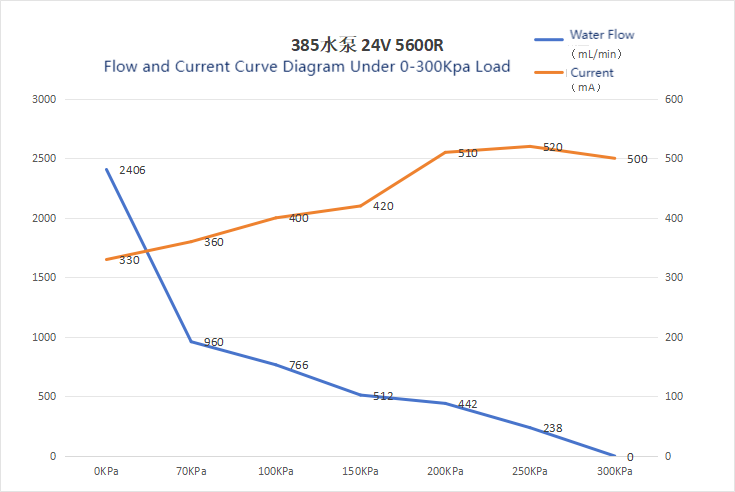
| Specification | Technical Standard (American English) | Application Context |
| Rated Power | 15W -60W (Customizable) | Optimized for low energy consumption in battery-powered systems. |
| IP Rating | IP67 / IP68 | Fully submersible; dust-tight and protected against high-pressure water jets. |
| Service Life | 20,000 to 30,000 Continuous Hours | Enabled by advanced Brushless DC (BLDC) wear-resistant technology. |
| Operating Temperature | -40℉ to 257℉ (-40℃ to 125℃) | Automotive-grade reliability for extreme cold and high-heat environments. |
Operating costs
When choosing between electric motors and power take-off pumps, it is advisable to tourism and compare the cost ratio of running them. It's worth doing a cost analysis in dump watts per hour and matching it with the diesel used to run the power take-off pump.
New Section: Insights from our Engineering Team
Real-World Performance: Why Electric Beats Mechanical in High-Load Scenarios
"Many of our clients in the heavy-duty truck and performance tuning industries face a common challenge: engine overheating during idling or intense uphill hauls. In these scenarios, traditional mechanical pumps—which rely on engine RPM—simply can't move enough coolant.
Our engineering team recently conducted a side-by-side stress test comparing our brushless electric micro water pump against a standard mechanical setup in a modified heavy-duty commercial vehicle. Here is what we found:
-
Consistent Cooling at Low RPM: While the mechanical pump's efficiency dropped by 40% during idling, our electric pump maintained a steady, high-volume flow. This resulted in a 22% faster temperature recovery after high-speed runs.
-
Peak Heat Management: Under a simulated steep-grade climb, our pump helped maintain an engine head temperature 15°F lower than the baseline. By decoupling the cooling system from the engine speed, the pump provides 'on-demand' cooling exactly when the hardware needs it most.
-
The Bottom Line: For fleet managers and car enthusiasts, this isn't just about cooling; it's about protecting your engine investment and extending the lifespan of critical components under the toughest conditions."
The above is a brief introduction to the electric water pump. If you want to know more about the water pump, please contact us.
you like also all
Read More News
Post time: Dec-11-2025