

Summary
A 12V micro water pump is commonly used in portable equipment, laboratory instruments, monitoring systems and compact OEM products. When designing a DC-powered device, matching the voltage is only the first step. The actual operating time depends on current consumption, working conditions and battery capacity.
This article explains how to evaluate power consumption, estimate battery runtime and select a suitable 12V pump for equipment design.
Key Points
● Voltage determines the required power supply, while current affects energy consumption.
● Pump current changes with pressure, tubing resistance and working conditions.
● Battery runtime depends on pump current and operating cycle.
● Actual performance should be tested after integration into the complete system.
Why Power Consumption Matters When Selecting a 12V Pump
For battery-powered or portable equipment, power consumption directly affects product operating time.
Before selecting a pump, engineers should also evaluate flow, pressure and voltage requirements. A detailed micro water pump selection guide can help match pump performance with the complete system design.
A common misunderstanding is that a pump with the same voltage rating will consume similar energy. In reality, two 12V pumps may have very different current requirements because of differences in motor design, pressure capability and internal structure.
For example, one pump may operate at 300mA while another requires 800mA under the same voltage. In a battery-powered product, this difference can significantly affect runtime.
When selecting a pump, engineers usually need to confirm not only the voltage, but also the actual working current under the required pressure and flow condition.
How Voltage, Current and Power Consumption Are Related
Voltage, current and power describe different parts of the electrical system.
Voltage represents the required power supply. A pump marked as 12V should operate within the recommended DC voltage range.
Current represents the electrical load during operation. This value changes depending on the pump workload.
Power consumption is calculated from voltage and current:
Power (W) = Voltage (V) × Current (A)
For example:
| Parameter | Value |
|---|---|
| Voltage | 12V |
| Current | 0.5A |
| Power Consumption | 6W |
This means a pump operating at 12V and 0.5A consumes approximately 6 watts under that working condition.
Typical Current Draw of a 12V Micro Water Pump
The current draw of a pump is not always constant.
During actual operation, the motor load changes according to the water path, pressure requirement and system resistance.
A typical reference range is shown below:
| Working Condition | Current Range | Description |
|---|---|---|
| No load | 100–300mA | Pump operating with minimum resistance |
| Normal operation | 300–800mA | Common working condition |
| High load condition | 1.5–3A | Excessive resistance or blocked outlet |
The exact current depends on the pump model and application.
For product design, the normal operating current is usually used for calculating energy consumption. Startup current and overload current should also be considered when selecting the power supply and protection circuit.
How to Calculate Battery Life for a 12V Pump?
Battery-powered equipment requires an estimation of how long the pump can operate before recharging.
The basic calculation is:
Runtime (hours) = Battery Capacity (Ah) ÷ Pump Current (A)
For example:
A battery with 5Ah capacity supplies a pump operating at 0.5A:
5Ah ÷ 0.5A = approximately 10 hours
This value represents continuous operation under ideal conditions.
Actual runtime may be affected by:Battery efficiency、Voltage drop during discharge、Temperature、Changes in pump load
Battery Runtime Example
Assuming:
Pump voltage: 12V
Working current: 0.5A
| Battery Capacity | Estimated Runtime |
|---|---|
| 1000mAh | About 2 hours |
| 5000mAh | About 10 hours |
| 10000mAh | About 20 hours |
For equipment using intermittent operation, the actual runtime can be much longer.
For example, a monitoring device may only activate the pump during sampling. The average energy consumption will be lower than continuous operation.
What Factors Affect 12V Pump Current Draw?
The current shown in a specification sheet is normally measured under a defined test condition. After installation into the final equipment, the actual current may change.
One major factor is pressure.
When water passes through narrow tubing, filters, valves or nozzles, resistance increases. The motor needs more torque to maintain liquid delivery, which increases current consumption.
The tubing design also affects power usage. A long tube or smaller inner diameter creates higher resistance compared with a short and larger tube.
For this reason, pump testing should be performed with the complete liquid system rather than only testing the pump itself.
How Working Cycle Affects Power Consumption
Many products do not require continuous pumping.
A portable device may only run the pump during a specific operation. A monitoring system may activate the pump only when collecting a sample.
For example:
A pump running for 1 minute every 10 minutes does not consume the same energy as a pump running continuously.
The duty cycle has a direct impact on average power consumption and battery life.
When designing battery-powered equipment, the working time of the pump should be considered together with the pump specification.
Does Motor Type Affect Energy Consumption?
Motor design also influences power efficiency. For equipment requiring long operating periods, a brushless micro pump can be considered because it provides stable operation and longer service life without carbon brush wear.
A brushed pump may be suitable for applications where cost and intermittent operation are the main considerations.
For equipment requiring longer operating periods, a brushless micro pump is often considered because it does not use carbon brushes and generally provides longer service life.
Brushless designs are commonly used in applications where:Operating time is long、Maintenance needs to be reduced、Stable performance is required
How to Select a Low Power 12V Micro Water Pump?
Low power consumption should be evaluated together with the actual application requirement.
Choosing the lowest current pump is not always the best solution. If the pump cannot provide enough pressure or flow, it may need to run longer or operate under higher load.
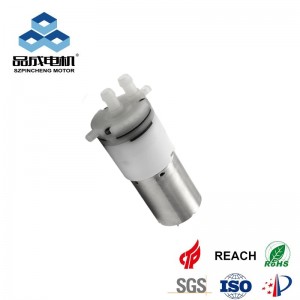
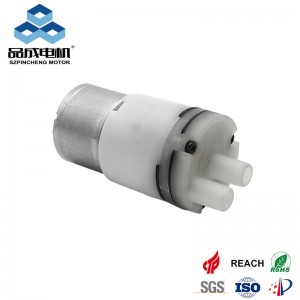
For applications requiring stable pressure delivery, a 12V diaphragm pump is commonly used in compact OEM equipment. The selection should match the equipment condition:
| Equipment Requirement | Suitable Direction |
|---|---|
| Battery-powered equipment | Low current pump |
| Long operating time | Brushless pump |
| Pressure water delivery | 12V diaphragm pump |
| Limited installation space | Compact DC pump |
| Intermittent operation | Pump matched with duty cycle |
For OEM projects, testing the pump under the actual working condition is the most reliable way to confirm power consumption.
Applications Using 12V Micro Water Pumps
1、Portable Medical Equipment
Portable medical and rehabilitation products usually have limited installation space and strict power requirements.
The pump needs to provide stable liquid delivery while keeping energy consumption within the battery capacity.
2、Laboratory and Analytical Instruments
Laboratory systems usually require controlled liquid movement rather than high-volume transfer.
A suitable pump helps maintain stable operation while keeping power consumption within the system design.
3、Environmental Monitoring Equipment
Monitoring devices are often installed in locations without fixed power sources.
Low current consumption and proper working control help extend operating time.
4、Smart Appliances and Compact Devices
Many small appliances use DC power systems because they are easier to integrate into compact products.
The pump needs to balance installation space, liquid delivery performance and energy consumption.
Pinmotor 12V Micro Water Pump Solutions
Pinmotor provides DC micro pump solutions for OEM equipment.
Different pump configurations can be selected according to voltage requirements, current limitations, pressure conditions, working cycles and installation space.
| Pump Type | Application Direction |
|---|---|
| Micro diaphragm pump | Pressure water delivery |
| 12V diaphragm pump | Compact pressure applications |
| Brushless micro pump | Long operating applications |
| Self-priming pump | Flexible installation |
For projects with strict power requirements, the pump should be evaluated according to the complete equipment condition before mass production.
Frequently Asked Questions
1、How much current does a 12V micro water pump use?
The current depends on the pump model and working condition. Small pumps may operate at several hundred milliamps, while higher pressure applications may require higher current.
2、Does higher current mean better pump performance?
No. Higher current only means higher electrical consumption. Pump performance should be evaluated according to the required pressure, flow and operating condition.
3、Can a 12V pump run on battery power?
Yes. The operating time depends on battery capacity, current consumption and working cycle.
4、Why is the actual current different from the specification?
Because the final equipment includes tubing, valves, filters and other components that change the pump load.
Need a 12V Micro Water Pump for Your Equipment?
When selecting a pump for battery-powered or compact equipment, provide the actual application information:
Voltage requirement, working pressure, liquid type, operating cycle and battery condition.
For projects requiring specific voltage, current limits or installation requirements, Pinmotor provides custom micro pump solutions for OEM applications.
Read More News
Post time: Aug-24-2026