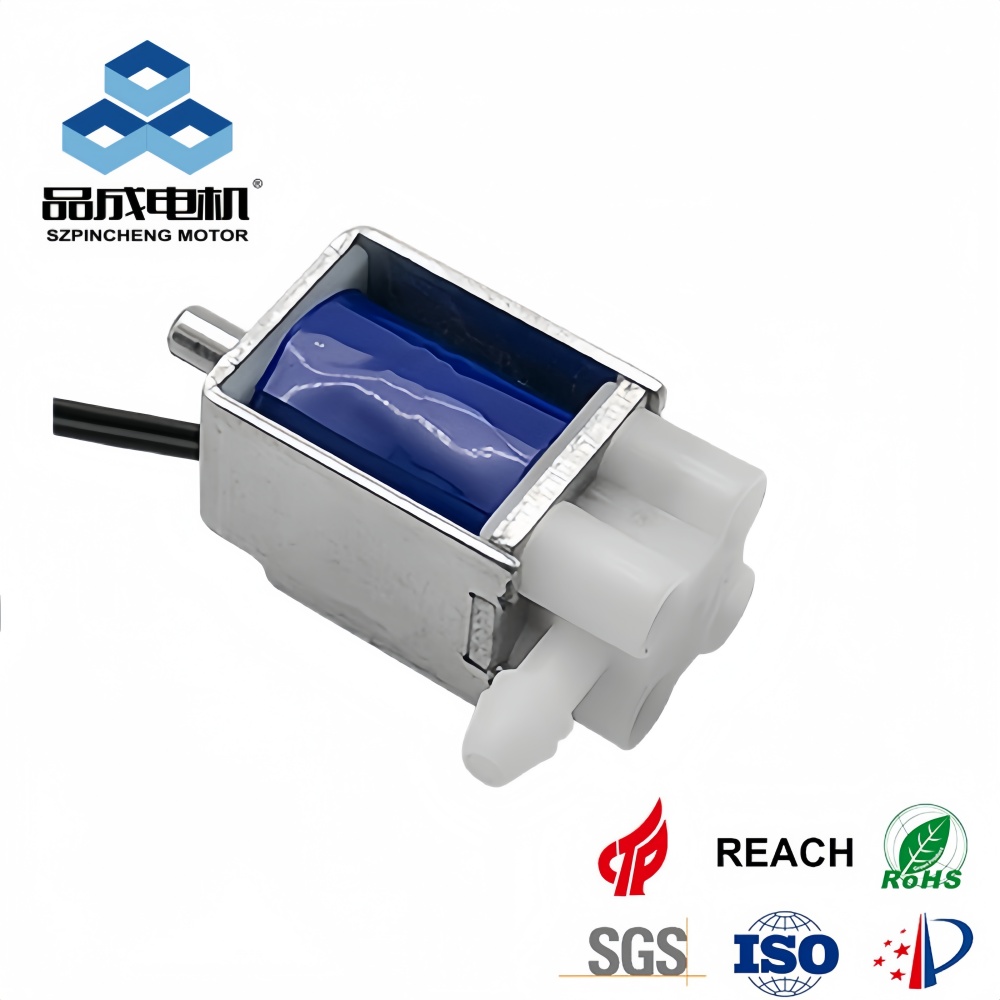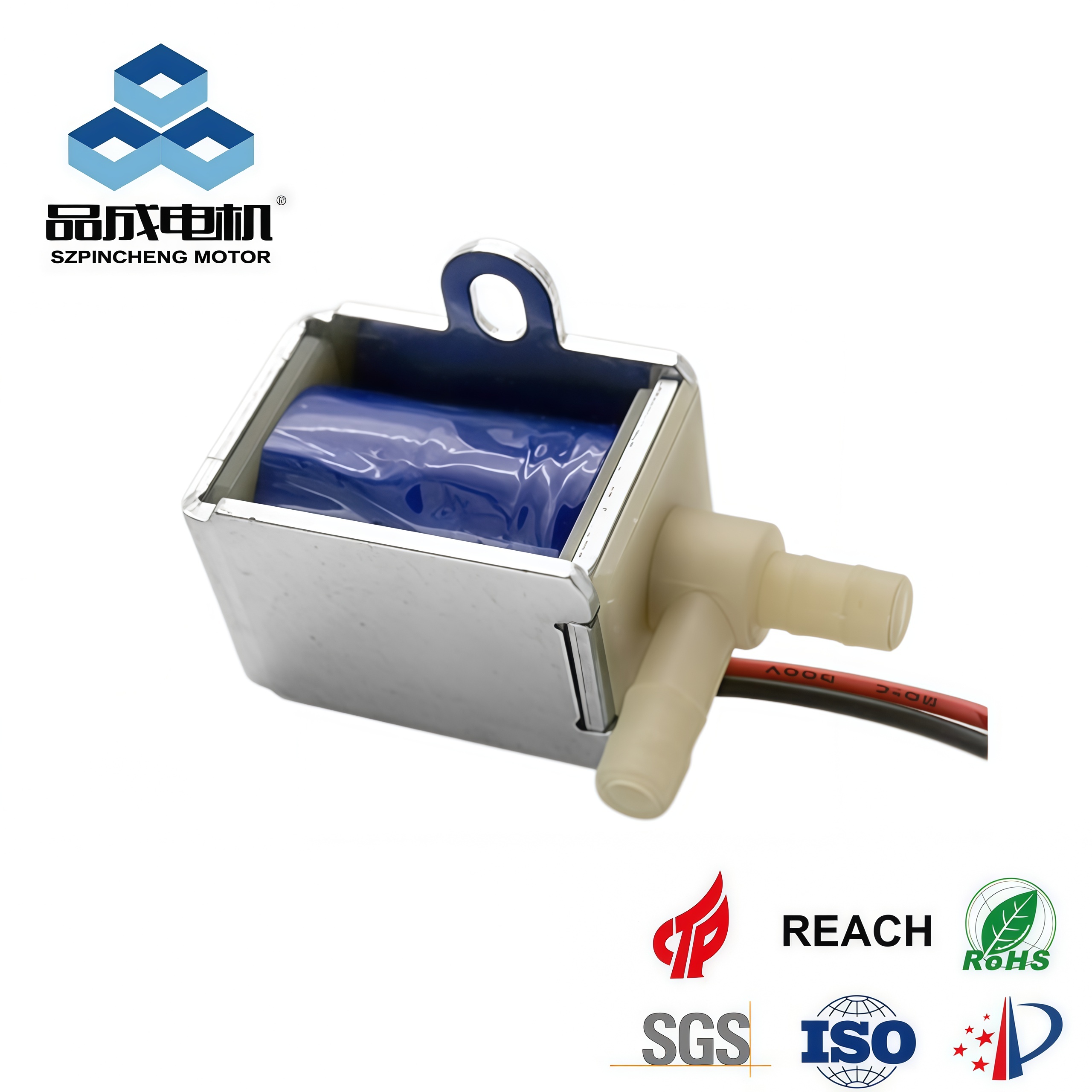

Micro Water Solenoid Valve Manufacturer
Pinmotor manufactures compact solenoid valves for controlling water and other compatible liquids in OEM equipment.
Available options include normally open and normally closed valves, different DC voltages,
plastic or stainless-steel valve bodies, multiple seal materials and several port configurations.
Send us the liquid type, pressure, flow requirement, voltage and installation drawing.We will check whether a standard valve can be used or whether modification is required.
Micro Water Solenoid Valve Product Range
Pinmotor’s micro water solenoid valve range is organized by operating mode and wetted-body material. Normally open and normally closed options cover different power-off requirements, while plastic and stainless-steel bodies are selected according to liquid compatibility, temperature, cleaning conditions and installation needs. The final valve configuration should be confirmed against the complete liquid circuit rather than by valve type alone.
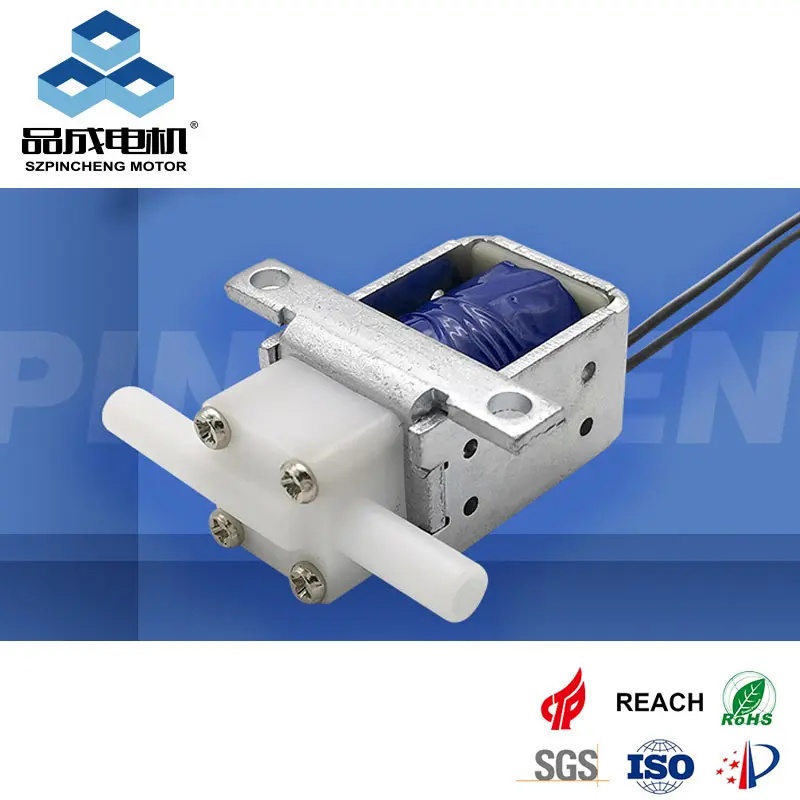
A normally closed micro water solenoid valve keeps the liquid passage closed when power is removed.
It is commonly used for:
● inlet-water shut-off
● controlled liquid dispensing
● standby leak prevention
● filling and washing cycles
This structure is normally selected when the equipment must stop liquid flow during a power failure.
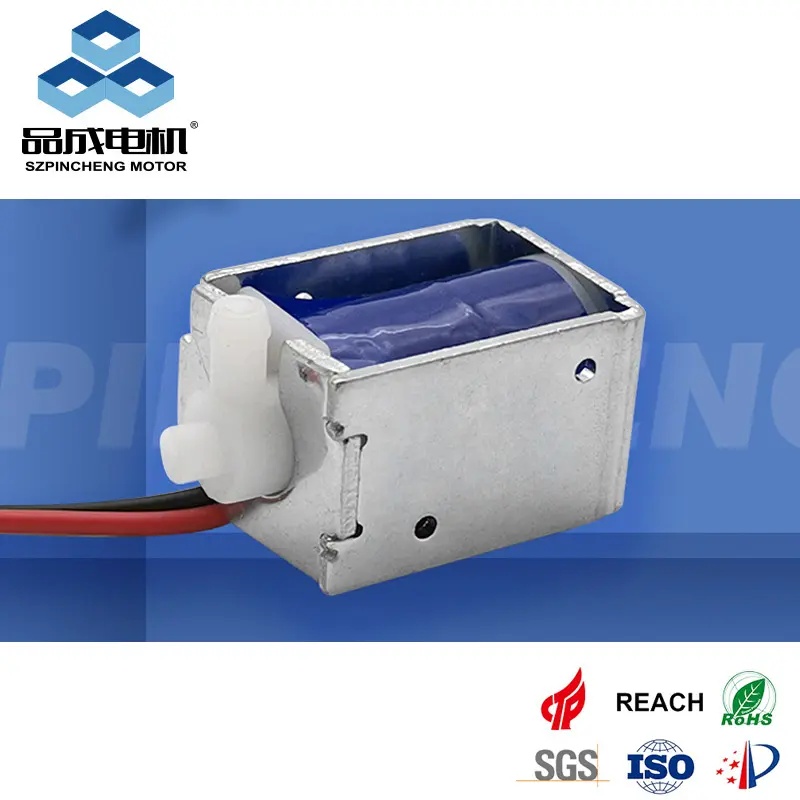
A normally open valve keeps the liquid passage open when no voltage is applied.
It may be used for:
● gravity drainage
● default circulation
● cooling-liquid circuits
● emergency release
The correct operating mode should be selected according to the required valve state when the equipment is switched off.
PPS and PA66 valve bodies are suitable for compact water-handling equipment where low weight and corrosion resistance are required.
Material approval should also consider water temperature, cleaning chemicals, thread load and long-term liquid contact.
304 and 316L stainless-steel options are available for systems requiring stronger wetted parts, higher temperature resistance or specific material compatibility.
The complete wetted path must be reviewed. A stainless-steel body does not automatically make every internal component suitable for the target liquid.
Technical Specifications
The following values describe the available micro water solenoid valve range. Final values depend on the selected model.
| Parameter | Available Range | Engineering Recommendation |
|---|---|---|
| Valve Structure | Direct acting | Use when the system requires reliable switching without depending on pilot pressure. |
| Operating Mode | Normally open or normally closed | Select according to the required liquid-path state when the equipment loses power. |
| Rated Voltage | 3V, 5V, 6V, 12V or 24V DC | Check the actual voltage at the valve terminals under normal and minimum supply conditions. |
| Rated Power | 1.5W–5.76W | Confirm that the controller can supply the required current and that coil temperature remains acceptable during the intended duty cycle. |
| Body Materials | PPS, PA66, 304 SS or 316L SS | Select after confirming liquid type, temperature, cleaning agent and required material compatibility. |
| Seal Materials | EPDM, FKM, silicone or FFKM | Verify compatibility with the working liquid, additives and cleaning chemicals before approval. |
| Media Temperature | Model- and material-dependent | Evaluate continuous operating temperature separately from short-term hot-liquid exposure. |
| Working Medium | Water or approved compatible liquids | Provide the exact liquid name, concentration and additives before final valve selection. |
A maximum product-range value should not be treated as the guaranteed specification of every valve.
Need Help Selecting a Micro Water Solenoid Valve?
Send us your liquid type, voltage, operating temperature, required valve state and installation requirements. Pinmotor engineers will review the conditions and recommend a suitable micro water solenoid valve for your system.
How Does a Direct Acting Water Solenoid Valve Work?
The controller applies DC voltage to the coil. The magnetic field generates the force required to move the internal plunger.
Voltage should be measured at the valve terminals. Wiring resistance, connectors and PCB traces may reduce the voltage delivered to the coil.
The plunger moves against the spring force and liquid pressure.
Incomplete movement may result from:
insufficient terminal voltage
excessive inlet pressure
particles near the valve seat
deposits around the plunger
excessive coil temperature
The seal opens or closes the internal liquid passage.
The installed flow is affected by the complete circuit, including the valve orifice, tubing, fittings, filters, bends and outlet nozzle.
When power is removed, the return spring moves the plunger back to its initial position.Residual liquid pressure may affect the return action. The valve must therefore be tested at the actual pressure and mounting position used in the equipment.
Material Compatibility for Water and Liquid Media
| Liquid | Initial Body Option | Initial Seal Option | Items to Confirm |
|---|---|---|---|
| Purified water | PPS or PA66 | EPDM or silicone | Temperature and contact time |
| Drinking water | PPS or stainless steel | EPDM or silicone | Required food-contact documents |
| Coffee or tea water | PPS or stainless steel | Silicone or EPDM | Heat cycles and descaling agents |
| RO or deionized water | PPS | EPDM | Continuous contact and material extraction |
| Saline or diagnostic reagent | 316L stainless steel | Silicone, FKM or FFKM | Concentration and sterilization method |
| Glycol coolant | PPS or PA66 | EPDM | Glycol percentage and temperature |
| Mild chemical liquid | Stainless steel | FKM or FFKM | Chemical name, concentration and exposure time |
This table is suitable for initial screening only. A final material decision requires the actual liquid specification.
Micro Water Solenoid Valve Applications
Coffee Machines and Beverage Equipment
A micro water solenoid valve for coffee machine systems may control:
● inlet water;
● brewing circuits;
● hot-water dispensing;
● flushing;
● internal liquid routing.
Selection should consider brewing temperature, pump pressure, descaling chemicals and mineral deposits.
Water Purification Systems
A micro solenoid valve for water purifier equipment can control:
● inlet water;
● filter flushing;
● clean-water outlet;
● drainage;
● membrane protection cycles.
Continuous water contact, chlorine concentration and scale formation should be considered during material selection.
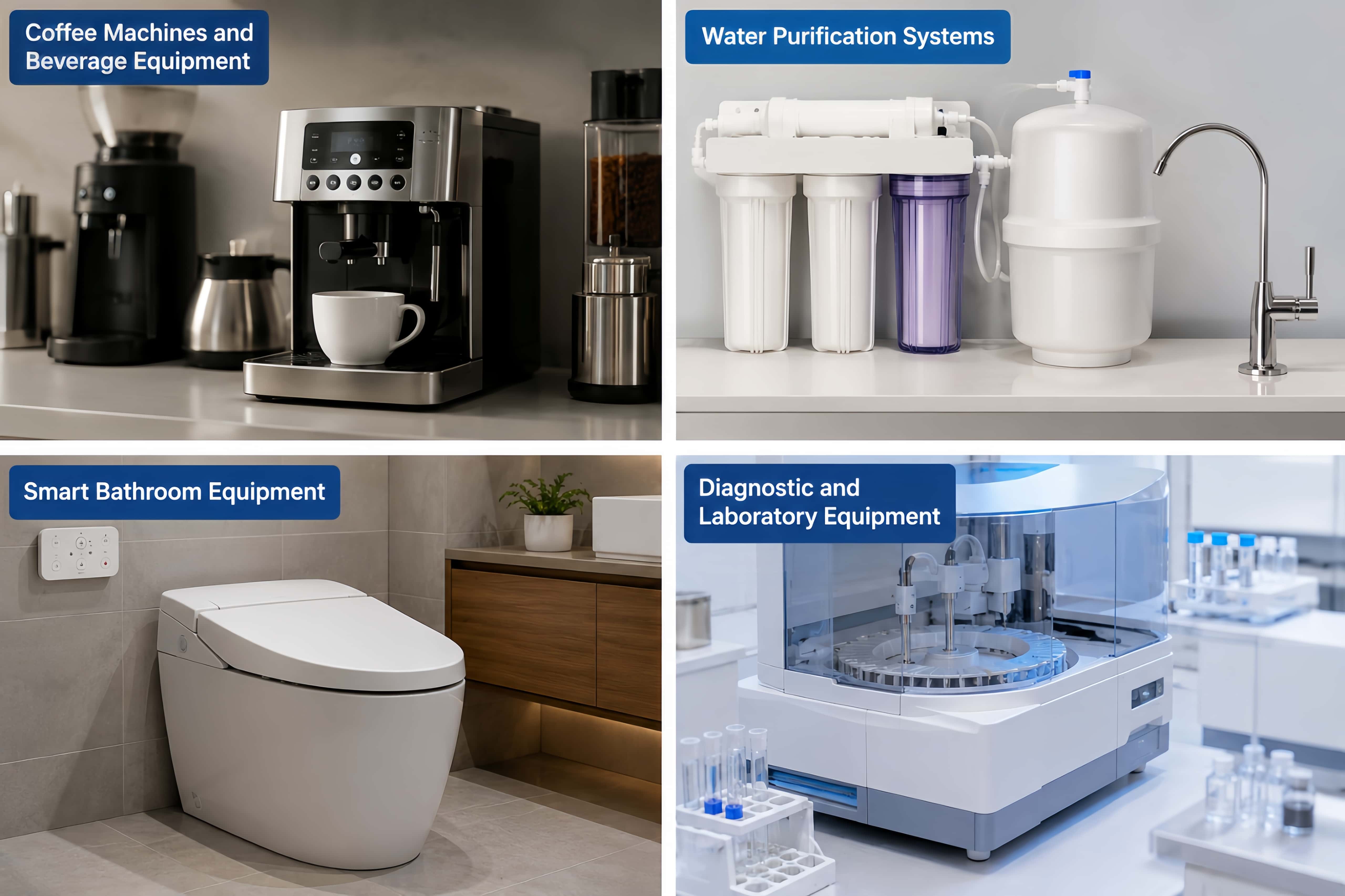
Smart Bathroom Equipment
Small water solenoid valves can be installed in:
● intelligent toilets;
● bidet systems;
● nozzle-cleaning circuits;
● water-mixing modules;
● hygiene equipment.
The installation design should address moisture protection, internal drainage, connector position and available space.
Diagnostic and Laboratory Equipment
A micro liquid solenoid valve can route water, buffers, cleaning fluids and ● approved reagents in:
● diagnostic analysers;
● sample-preparation equipment;
● laboratory automation;
● rinsing modules;
● analytical instruments.
The project should define dead volume, cross-contamination limits, cleaning methods and material documentation.
Need a Micro Water Solenoid Valve for Your Application?
Whether your equipment is used for coffee brewing, water purification, smart bathroom systems or laboratory liquid control, send us your liquid type, working conditions and installation requirements. Pinmotor engineers will help match a suitable valve configuration for your application.
OEM Micro Water Solenoid Valve Customization
Pinmotor checks the available standard valve platforms before modifying the electrical, liquid or mechanical interface.
Electrical Configuration
Available options may include:
● 3V, 5V, 6V, 12V and 24V DC coils;
● wire length;
● connector type;
● terminal arrangement;
● polarity marking;
● wire-exit direction.
Body and Seal Materials
Valve-body and seal combinations can be reviewed according to the liquid, temperature, cleaning method and required compliance documents.
Port and Flow-Path Configuration
Port diameter, thread type, hose connection, port direction and manifold arrangement can be adjusted within the limits of the selected valve structure.
Mechanical Integration
Provide the available installation space or equipment drawing.
The review should cover:
● mounting-hole position;
● tubing bend radius;
● connector access;
● assembly direction;
● surrounding clearance;
● maintenance access.
The final sample and drawing should be approved before the surrounding equipment structure enters mass production.
Testing and Technical Documentation
Testing should follow the agreed valve model and application conditions.
Electrical Checks
Typical checks include:
● coil resistance;
● operating current;
● terminal voltage;
● powered switching;
● spring return;
● coil temperature.
Liquid-Path Checks
Typical checks include:
● flow direction;
● opening and closing under pressure;
● pressure holding;
● internal leakage;
● external leakage;
● flow at the agreed pressure difference.
Reliability Testing
A cycle-life test should record:
● liquid medium;
● inlet pressure;
● liquid temperature;
● ON/OFF time;
● switching frequency;
● mounting position;
● acceptance limits.
A cycle number without its test conditions should not be used as the only approval basis.
Available Documents
Depending on the selected product and project, Pinmotor can provide:
● product specification;
● dimensional drawing;
● wiring definition;
● CAD file;
● inspection criteria;
● material declaration;
● applicable CE, RoHS or EMC documents;
● quality-management certificates.
Frequently Asked Questions
What is the MOQ for a micro water solenoid valve?
MOQ depends on whether you choose a standard or modified valve. Standard models are more suitable for initial purchasing, while customized structures normally require a higher project quantity. Pilot samples can be arranged before mass production.
How long does it take to receive samples?
Standard models can usually be prepared faster than customized versions. If the project requires changes to the coil, materials, ports or housing, sample lead time starts after the drawing and configuration are confirmed.
Can I order a small pilot batch before full production?
Yes. A pilot batch can be used to verify assembly, liquid compatibility and equipment performance before moving to the final production quantity.
Can you make a valve for a non-standard voltage?
Yes. In addition to common DC voltages, non-standard coil voltages can be evaluated when the customer’s controller or battery system requires a different electrical specification.
Can the valve be used with liquids thicker than water?
Possibly, but viscosity must be checked first. Higher-viscosity liquids can reduce flow and change opening or closing behaviour, so the actual medium and operating temperature should be provided for evaluation.
Can food-contact material documents be supplied?
Yes, for applicable configurations. Food and beverage projects can use selected body and seal materials with supporting material documentation. The required standard should be confirmed before the valve is approved.
Are IP65 or IP67 versions available?
Selected coil and connector configurations can support higher ingress-protection requirements. The required IP level should be confirmed together with the connector, wire exit and installation environment.
Can Pinmotor support long-term OEM supply after the valve is approved?
Yes. Once the valve configuration is finalized, the approved specification, drawing and production requirements can be used as the reference for repeat orders, helping reduce changes between production batches.
Ready to Move from Sample to Production?
Once your valve configuration is confirmed, Pinmotor can support drawing approval, sample testing, production specifications and repeat-order consistency for your OEM project.