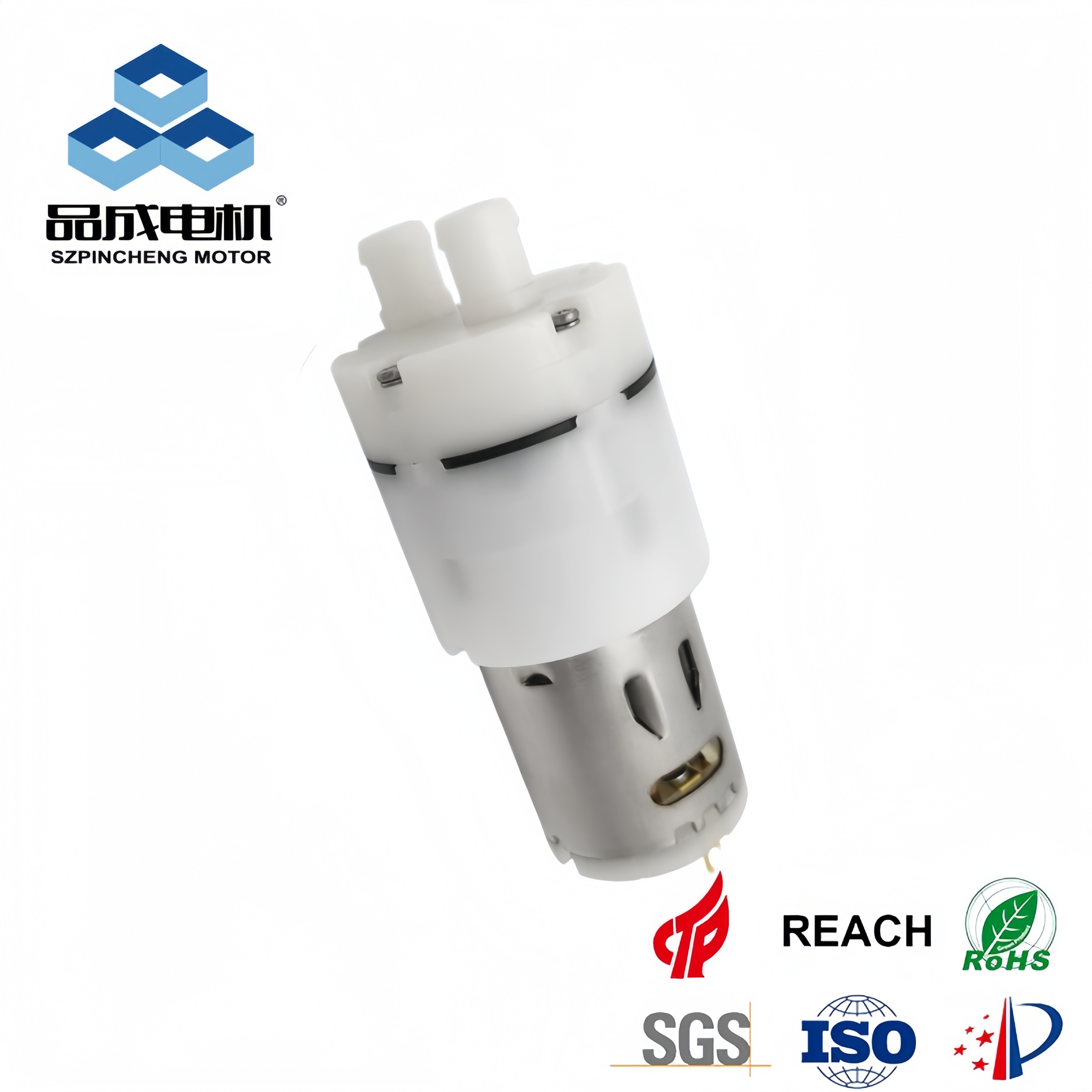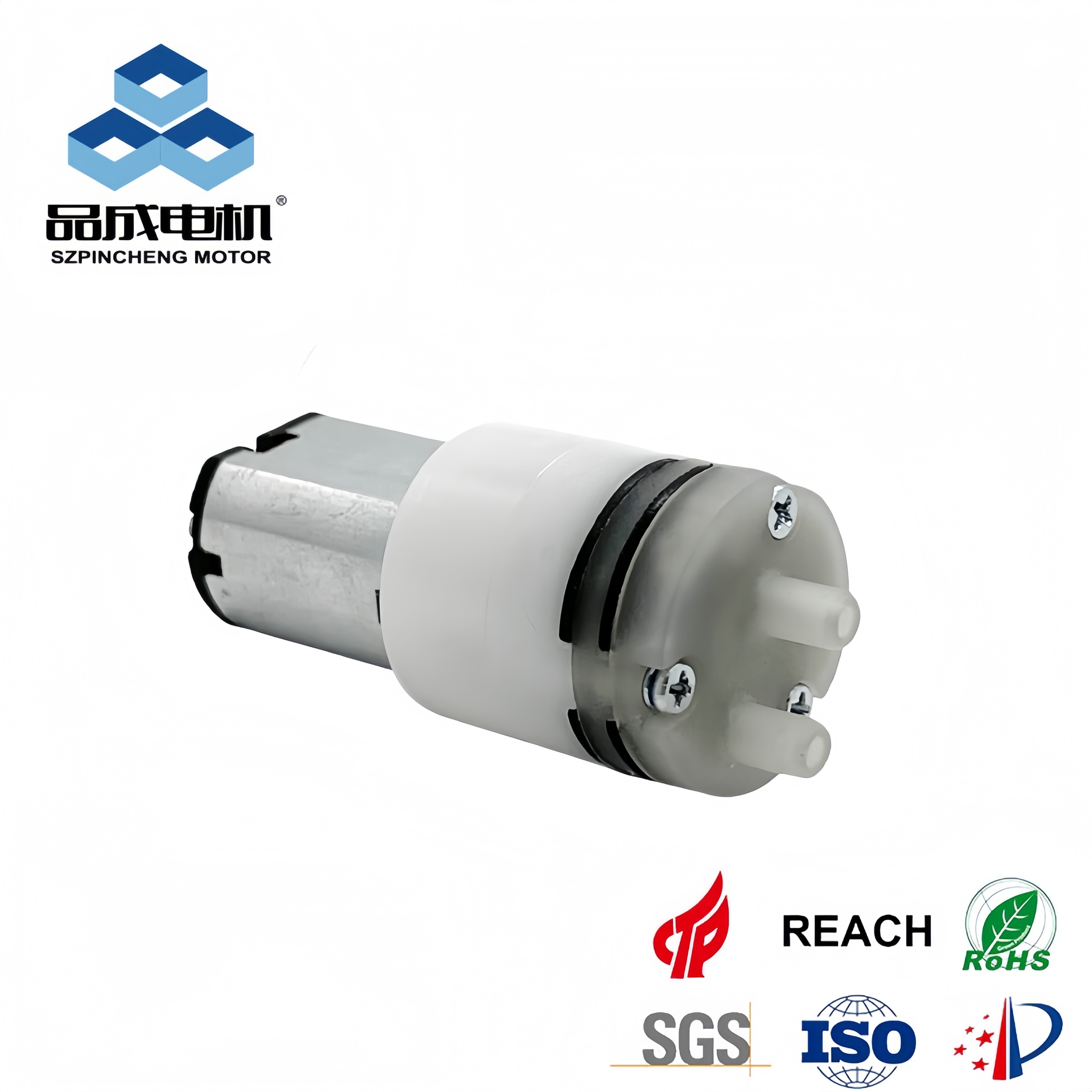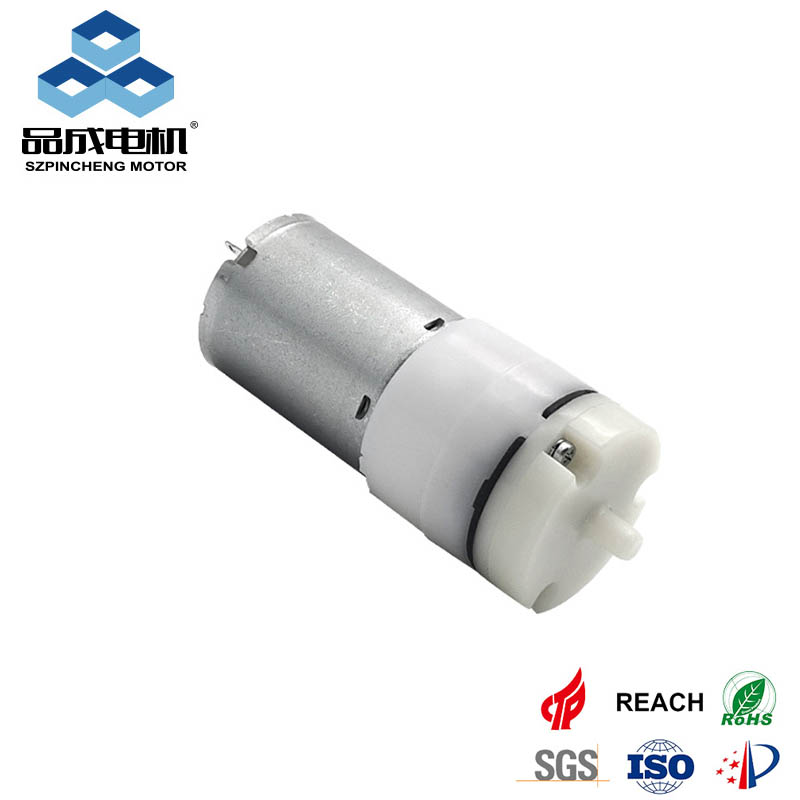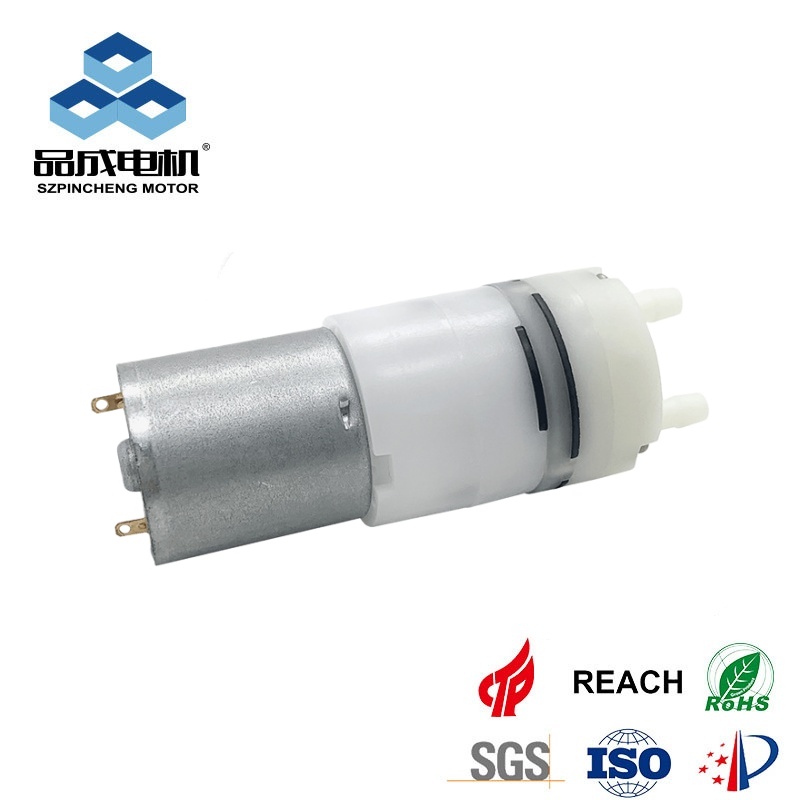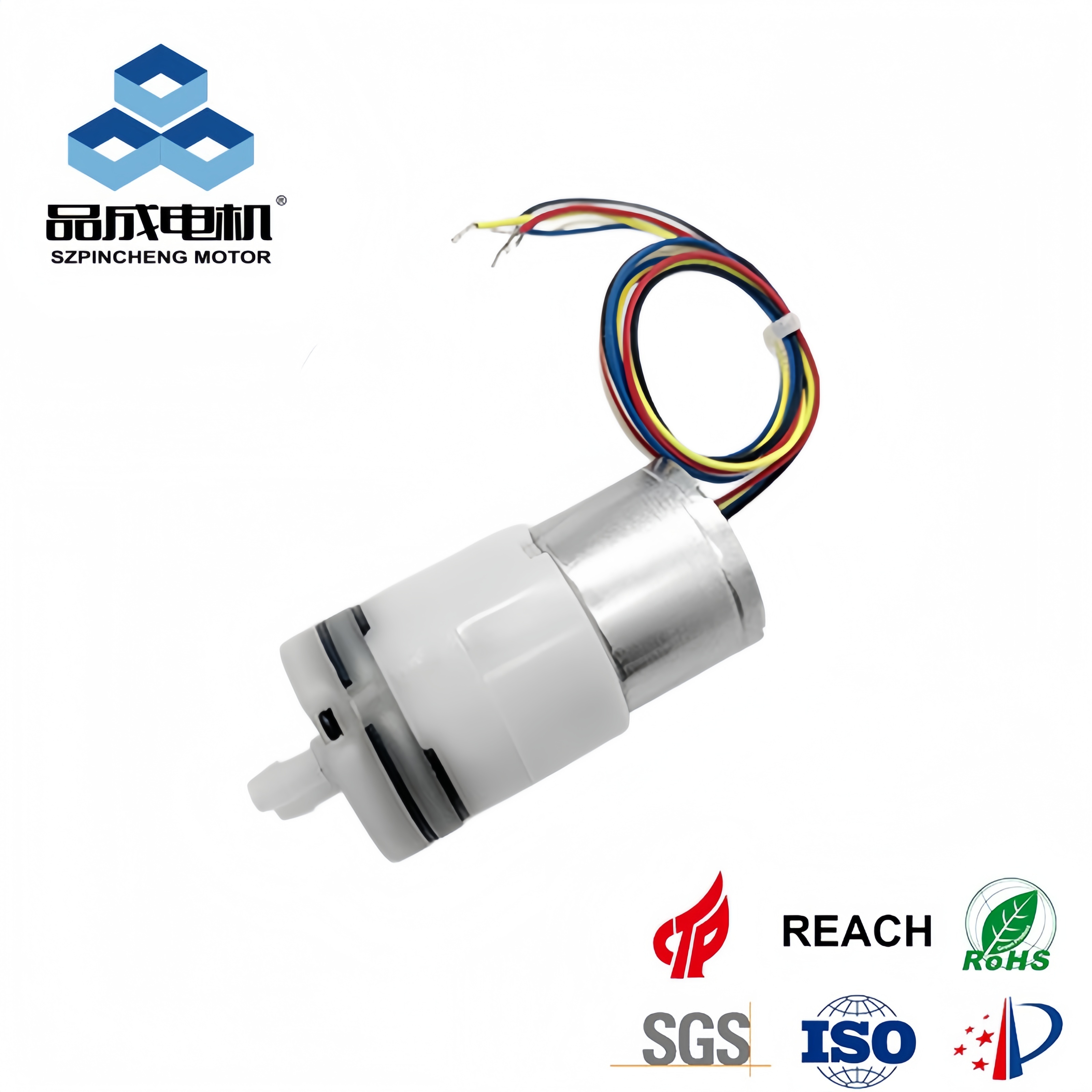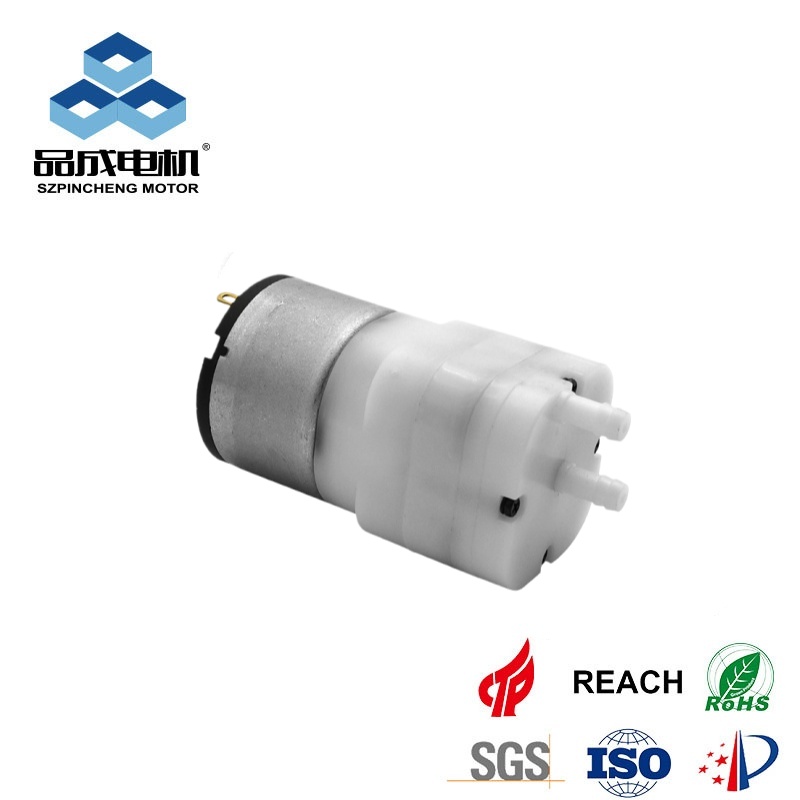

12V Micro Water Pumps | OEM & ODM Supplier
Pinmotor offers OEM 12V micro water pumps including diaphragm, brushless, submersible, and inline models, with flow rates from 0.5–5.0 LPM for compact liquid transfer systems.
Designed for medical devices, RV systems, coffee machines, solar equipment, and circulation applications, our 12V pumps deliver reliable performance, durability, and efficient power consumption.
12V Micro Water Pump Series Overview
The following overview highlights commonly selected 12V pump models used in OEM projects.
| Pump Type | Model | Flow Rate | Pressure Head | Current | Lifespan | Noise | Typical Applications |
|---|---|---|---|---|---|---|---|
|
|
370-XB | 1.2 LPM |
≥5m |
≤300mA |
≥ 500 hours |
≤65db(30cm away) |
RV water systems, portable coffee machines, vehicle cleaning equipment |
|
|
3042-WP | 200–500 mL/min | 3-5m | Customized | ≥100,000 Cycles | ≤55db(30cm away) | Portable espresso machines and beverage equipment |
|
Micro Diaphragm Pump (High Flow)
|
385-XA | 3.0 LPM | ≤550 mA | ≥ 500 hours | ≤65db(30cm away) | Portable spraying systems and general water transfer applications | |
|
Brushless Water Pump (Long Life)
|
310A-XA-BL | 0.3-0.8 LPM | ≥2m | ≤300mA | ≥ 200 hours | ≤45db(30cm away) | Medical devices, circulation systems, laboratory equipment |
Micro diaphragm pumps are commonly used in portable appliances and vehicle-powered equipment where compact size and stable pressure output are required.
High-flow diaphragm pumps are suitable for applications that prioritize water delivery efficiency, such as spraying systems and fluid transfer devices.
High-pressure pumps are typically selected for beverage equipment and other systems requiring elevated outlet pressure.
Brushless pumps are preferred for applications requiring lower noise levels and extended operating life, including medical equipment and continuous circulation systems.
12V vs 24V: Which Voltage Is Right for Your Application?
Both 12V and 24V micro water pumps are used in OEM applications, but the right choice depends on the available power source, installation environment, and equipment design requirements.
For most portable and battery-powered equipment, 12V remains the preferred option due to its compatibility with vehicle electrical systems, lithium battery packs, and standard DC adapters. In contrast, 24V pumps are more commonly used in industrial equipment that already operates on a 24V DC platform.
| Criteria | 12V Micro Water Pump | 24V Micro Water Pump | Selection Recommendation |
|---|---|---|---|
| Typical Power Source | Vehicle electrical systems, 12V lithium batteries, AC adapters | Industrial 24V DC power supplies | Choose the voltage that matches your existing system |
| Pinmotor Product Availability | Available across most diaphragm pump models | Available for selected models only | 12V offers more model options |
| Portable Equipment Compatibility | Excellent | Limited | 12V is recommended |
| Vehicle Integration | Direct connection to automotive 12V systems | Requires voltage conversion | 12V is preferred for automotive applications |
| Battery-Powered Applications | Widely used with lithium and lead-acid batteries | Less common due to higher system complexity | 12V is easier to implement |
| Long Cable Installations | Suitable for short-distance installations | Lower operating current may benefit longer cable runs | Consider 24V when cable distances are significant |
| System Integration Cost | Lower, with readily available power supplies | May require dedicated 24V components | 12V is generally more cost-effective |
| Typical Applications | Portable coffee machines, RV water systems, portable cleaning devices, battery-powered equipment | Laboratory equipment, industrial automation systems | Select based on application requirements |
When to Choose a 12V Micro Water Pump
A 12V micro water pump is generally recommended when:
- The equipment is powered by a vehicle electrical system.
- The system uses 12V lithium or lead-acid batteries.
- The product is designed for portable or mobile applications.
- Standard 12V DC adapters are used as the primary power source.
- Faster development and easier sourcing of power components are priorities.
Typical applications include:
- Portable espresso machines
- RV water supply systems
- Vehicle cleaning equipment
- Portable fluid transfer devices
- Battery-powered appliances
When to Consider a 24V Micro Water Pump
A 24V micro water pump may be more suitable when:
- The equipment already operates on a 24V industrial DC power system.
- The installation requires long cable runs, where lower operating current can help minimize voltage drop.
- The pump needs to be integrated into existing 24V automation equipment without additional voltage converters.
Typical applications include:
- Industrial automation equipment
- Laboratory systems
- Centralized fluid transfer systems
Not sure whether 12V or 24V is right for your project?
Share your application requirements with our engineers for model recommendations and OEM support.
Why 12V DC: The Standard Voltage for Mobile & Battery-Powered Equipment
12V DC has become the standard voltage for many micro water pump applications. Based on Pinmotor's OEM project experience, around 80% of battery-powered pump systems operate on 12V platforms.
Compared with 3V or 5V systems, 12V pumps provide higher flow and pressure capabilities. Compared with 24V solutions, they offer easier integration with automotive electrical systems, battery packs, and DC adapters. As a result, 12V micro water pumps are widely used in coffee machines, medical devices, RV systems, and solar-powered applications.
| Voltage | Typical Power Source | Representative Applications | Core Advantage | B2B Demand Share |
|---|---|---|---|---|
|
3–3.7V |
Single-cell lithium battery | Portable beauty devices, oral irrigators | Ultra-low power, smallest form factor | 5% |
|
5–6V |
USB / Dual-cell battery | Desktop water dispensers, small humidifiers | Convenient USB power | 8% |
| 12V | Vehicle / Lead-acid battery / AC adapter | Coffee machines, medical devices, car water systems, solar-powered systems | Standardized voltage, balanced power-to-size ratio | 80% |
| 24V | Industrial DC / Dual 12V in series | Industrial cooling, laboratory instruments | Higher power, longer lifespan | 7% |
Why Do Most OEM Projects Choose 12V Micro Water Pumps?
There are three primary reasons why 12V DC has become the mainstream voltage for micro water pumps in industrial and mobile systems:
1、Vehicle Standard Compatibility – Most vehicle electrical systems operate at 12V DC.
All on-board equipment, including coffee machines, cleaning devices, and water supply systems, can be directly integrated without additional voltage conversion.
2、Mature Lead-Acid / Lithium Battery Packs – 12V lead-acid or lithium battery packs are the most reliable and cost-effective DC power solutions.
They are also widely compatible with solar-powered systems, making 12V the default choice for mobile or off-grid applications.
3、Optimal Power-to-Size Ratio – In the 3.6–60W power range, 12V pumps provide the best efficiency-to-footprint ratio.
While 12V output is lower than 24V, it far exceeds the performance of 3–6V systems, providing a balanced solution for compact mobile devices.
12V Power Source Compatibility Guide
12V micro water pumps can be integrated with a variety of DC power sources commonly used in portable, automotive, and battery-powered equipment. Understanding the characteristics of different power options helps improve system reliability and simplifies product development.
The following guide outlines common 12V power solutions, their typical applications, and key considerations when integrating micro water pumps into your equipment.
| Power Source | Connection Method | Typical Applications | Design Considerations |
|---|---|---|---|
|
12V Lead-Acid Battery |
Direct connection | RV water systems, portable cleaning equipment, backup water supply devices | Install a fuse based on the pump's rated current. Follow the battery manufacturer's recommended operating specifications. |
|
12V Lithium Battery Pack |
Direct connection | Portable coffee machines, battery-powered appliances, portable fluid transfer equipment | A Battery Management System (BMS) is recommended to enhance battery safety and system stability. Ensure the battery can support the pump's startup current requirements. |
| Automotive 12V Power Supply | Cigarette lighter socket or direct wiring | Portable espresso machines, vehicle cleaning systems, RV water supply systems | Vehicle electrical systems may experience voltage fluctuations during engine startup and charging. Pumps should operate within the recommended voltage range of 10.8–13.2V DC. |
| AC 220V to 12V DC Adapter | Connection through the adapter output terminals | Desktop coffee machines, smart water dispensers, laboratory fluid transfer equipment | The adapter should provide an output current at least 1.5 times the pump's rated current to accommodate startup current demands. |
| 12V Solar Panel with Charge Controller | Connection through the charge controller output terminals | Small-scale irrigation systems, off-grid water transfer applications | A charge controller and battery storage system are recommended to maintain stable pump operation under varying sunlight conditions. |
Need help matching your 12V power system with the right micro water pump? Contact our team for OEM recommendations and technical support.
Typical Applications of 12V Micro Water Pumps
12V micro water pumps are widely used in portable and mobile equipment powered by vehicle electrical systems or rechargeable battery packs. The available power source often influences pump selection, installation methods, and system design requirements.
The examples below highlight common 12V pump applications and recommended models based on different power supply configurations.
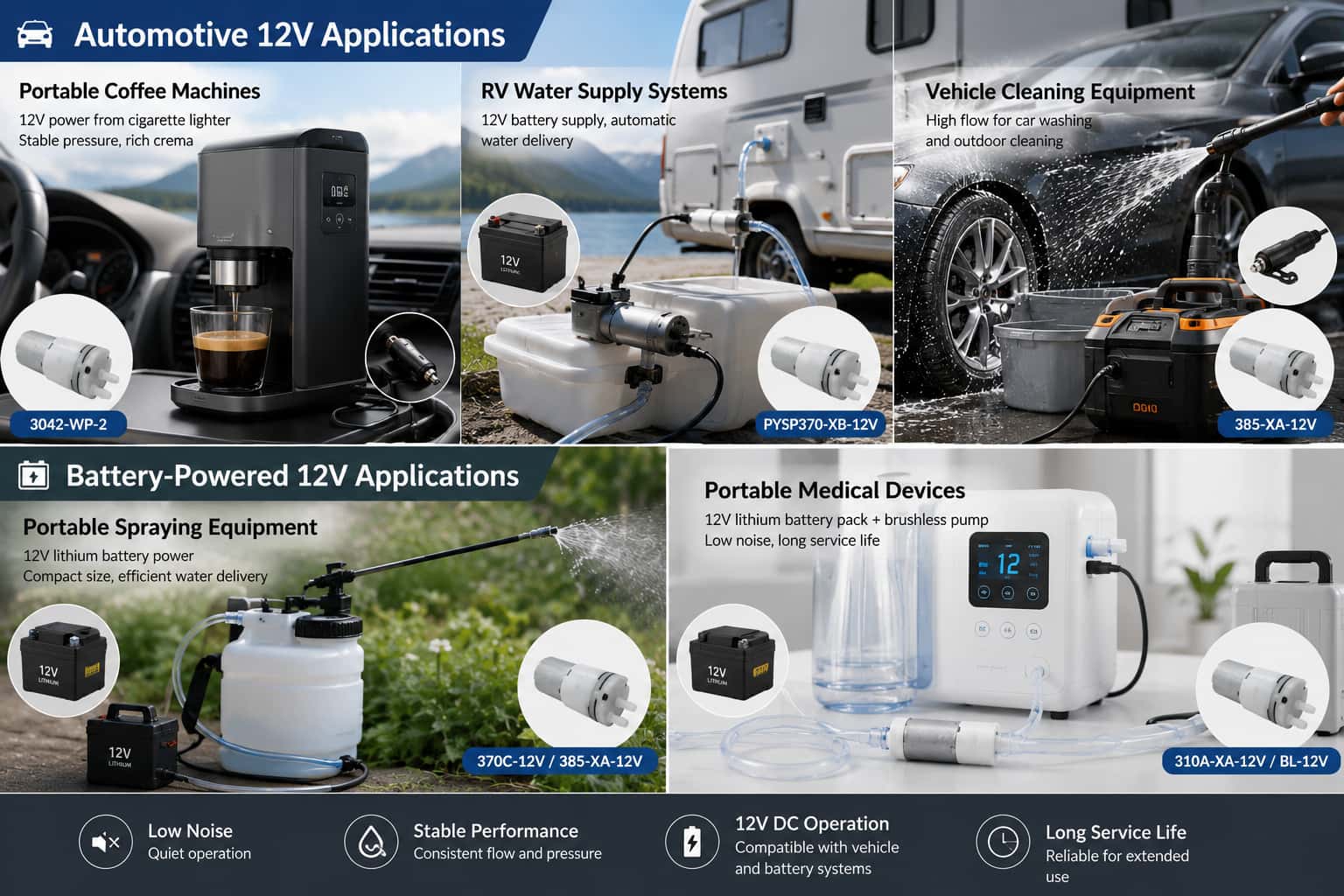
Automotive 12V Applications
Portable Coffee Machines
Portable coffee machines use 12V micro water pumps to transfer water from the reservoir to the brewing system. For espresso applications requiring higher extraction pressure, high-pressure pump solutions are commonly used.
Typical Requirements:
- 12V vehicle power supply
- Compact installation size
- Stable water delivery performance
RV Water Supply Systems
RV water systems typically operate from 12V battery systems and use diaphragm pumps to provide water for sinks, showers, and general cleaning.
Typical Requirements:
- 12V battery compatibility
- Stable pressure output
- On-demand water supply
Vehicle Cleaning Equipment
Portable cleaning equipment uses 12V pumps to supply water for vehicle washing and outdoor cleaning applications. Higher flow rates help improve cleaning efficiency.
Typical Requirements:
- Direct connection to 12V vehicle power
- Continuous water delivery
- Higher flow performance
Battery-Powered 12V Applications
Portable Spraying Equipment
Battery-powered spraying equipment uses 12V pumps to deliver a steady water supply while maintaining portability. Flow rate and battery capacity are typically considered during system design.
Typical Requirements:
- 12V lithium battery operation
- Moderate to high flow rates
- Compact system integration
Portable Water Transfer Equipment
Portable water transfer systems use rechargeable battery packs to move water in temporary or mobile applications where access to fixed power sources is limited.
Typical Requirements:
- Low power consumption
- Compact size
- Stable intermittent operation
Portable Medical Devices
Portable medical and laboratory equipment often uses 12V lithium battery packs as the primary power source. For applications requiring continuous circulation or liquid transfer, low-noise pumps with extended operating life help improve system reliability and user experience.
Typical Requirements:
- 12V battery compatibility
- Stable flow performance
- Low operating noise
- Extended service life
Need help selecting the right 12V micro water pump? Contact our team for OEM recommendations and technical support.
Electrical Integration Notes
When integrating a 12V micro water pump into your system, two key factors should be considered: startup current and speed control.
Startup Current and Power Supply Design
- 1、The startup current of a DC micro water pump is typically 2–3 times the rated current for a short period.
- 2、Power supplies and adapters should provide sufficient current capacity to handle startup demand.
- 3、Example: A 370C-12V pump rated at 350mA may require 700–1050mA during startup.
- 4、For systems with multiple pumps, sequential startup is recommended to reduce peak current load.
PWM Speed Control
- 1、Pinmotor brushless pumps support PWM speed control for adjustable flow applications.
- 2、Changing the PWM duty cycle adjusts motor speed and pump output.
- 3、Higher duty cycle = higher flow rate.
- 4、Lower duty cycle = lower flow rate and power consumption.
- 5、PWM control is recommended for brushless pumps and applications requiring variable flow.
- 6、Brushed pump models are generally not recommended for PWM speed control due to increased brush wear and electrical noise.
Why Choose Pinmotor for 12V Micro Water Pumps?
With over 17 years of OEM and ODM manufacturing experience, Pinmotor provides a complete range of 12V micro water pump solutions for customers worldwide. From prototype validation to mass production, we support projects with reliable products, stable supply capacity, and flexible customization services.
Complete 12V Product Portfolio
Pinmotor offers a full range of 12V micro water pump technologies, including:
- Micro diaphragm pumps
- Micro submersible pumps
- Brushless DC water pumps
- Micro peristaltic pumps
- High-pressure water pumps
- Self-priming water pumps
This comprehensive product range helps customers source different 12V pump solutions from a single supplier, simplifying procurement and project management.
Large-Scale Manufacturing Capacity
- Annual production capacity of 50 million units
- Daily production capacity of up to 400,000 units
- 85% automated production lines
- Typical lead time for mass orders: 10–15 days
Our manufacturing capability ensures stable supply for both small-volume and large-scale OEM projects.
Certified Quality Management System
Pinmotor products are manufactured under a comprehensive quality management system and comply with international standards, including:
- ISO 9001:2015、CE、RoHS、REACH、EMC
These certifications support customers in meeting regulatory and market requirements across different regions.
100% Functional Testing
Every 12V micro water pump undergoes functional testing before shipment, including:
- Operating current verification
- Flow performance testing
- Noise inspection
- 12V power operation validation
This testing process helps ensure consistent product quality and reliable field performance.
Trusted by Global Brands
Pinmotor has established long-term partnerships with customers ranging from innovative consumer brands to global enterprises, supporting projects that require consistent quality, supply stability, and engineering collaboration.
Fast Sampling and Flexible Order Support
- Sample lead time: 7 days
- Rapid prototype validation for new projects
- Minimum order quantity starting from 500 pieces
This allows customers to accelerate product development and reduce time-to-market.
FAQ About 12V Micro Water Pumps
Can a 12V micro water pump be powered directly by a battery?
Yes. Most 12V micro water pumps can operate directly from 12V lithium battery packs or 12V lead-acid batteries, provided that the battery can supply sufficient startup current. For battery-powered applications, a Battery Management System (BMS) is recommended to improve system safety and stability.
How much startup current should I consider when selecting a power supply?
The startup current of a DC micro water pump is typically 2–3 times the rated operating current for a short duration. When selecting a power supply or adapter, it is recommended to reserve sufficient current capacity to ensure reliable pump startup and stable operation.
Can 12V micro water pumps be used in automotive applications?
Yes. 12V micro water pumps are widely used in portable coffee machines, RV water supply systems, vehicle cleaning equipment, and other automotive accessories. Pumps should be selected to accommodate the voltage fluctuations commonly found in vehicle electrical systems.
Are 12V micro water pumps compatible with AC power supplies?
Yes. A 12V DC adapter can be used to power the pump in desktop or fixed-location applications. The adapter should provide adequate output current to meet both the pump's operating and startup current requirements.
Can the flow rate of a 12V micro water pump be adjusted?
Pinmotor brushless water pumps support PWM speed control, allowing flow adjustment by changing the PWM duty cycle. For brushed pump models, PWM control is generally not recommended due to increased brush wear and electrical noise.
Does Pinmotor provide OEM and customization services for 12V pumps?
Yes. Pinmotor supports OEM and ODM projects, including customization of voltage, flow rate, pressure, connector type, tubing orientation, wire length, mounting structure, and other specifications to meet specific application requirements.
Looking for a Reliable 12V Micro Water Pump Supplier?
Tell us about your application, and we'll help you find the right 12V pump solution for your OEM project.