

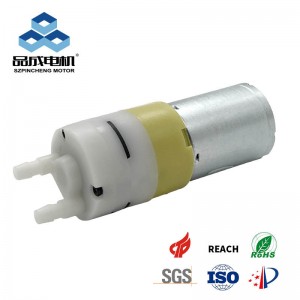
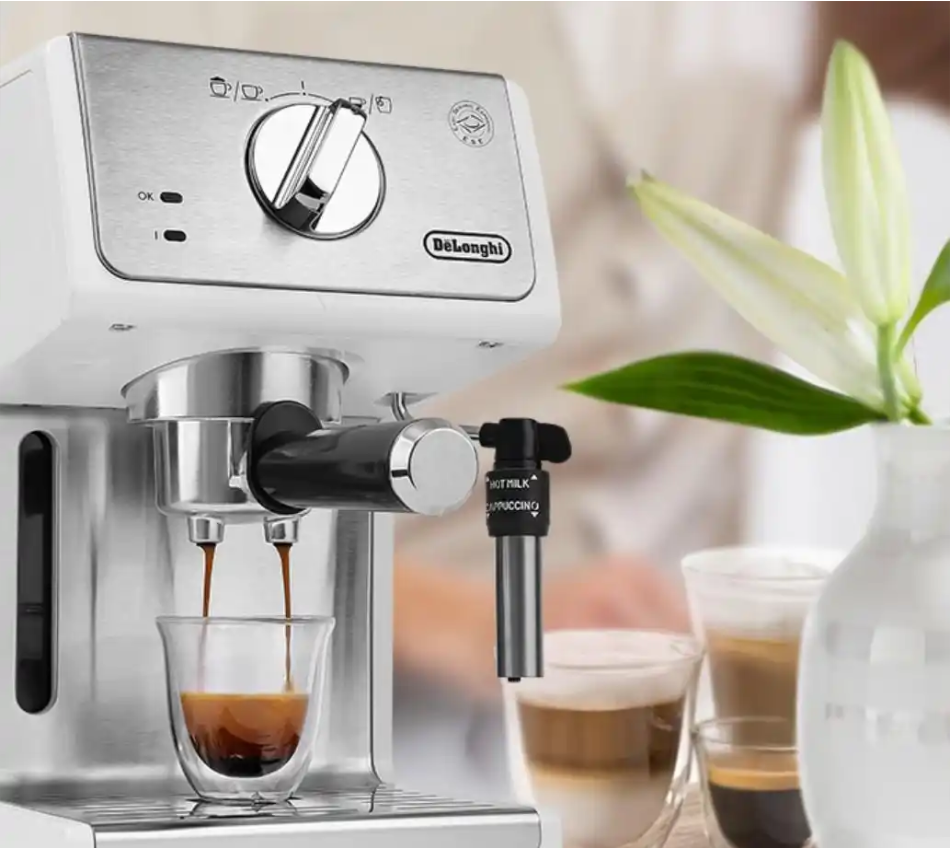
The 370 micro diaphragm pump can be used for several water-transfer functions inside a coffee machine. Typical uses include moving water from the tank, feeding a heating module, refilling an internal reservoir and supplying water during rinse cycles.
A current 370 reference configuration provides 0.5–1.2 L/min water flow, ≥30 PSI maximum water pressure and self-priming capability. These values belong to a specific configuration, so the final pump should still be checked against the required flow, voltage and actual machine water path.
Where Can a 370 Pump Be Used in a Coffee Machine?
A coffee machine can contain several water circuits, and they do not all require the same pump performance. The 370 is mainly suited to internal water transfer and auxiliary liquid circuits.
| Coffee Machine Water Circuit | 370 Pump Function | Main Check |
|---|---|---|
| Water tank transfer | Draw water into the machine | Tank position and priming |
| Heater feed | Supply water to heating module | Flow through actual heater circuit |
| Internal reservoir refill | Refill small buffer tank | Refill time and cycle frequency |
| Rinse / cleaning circuit | Deliver cleaning water | Water volume and liquid compatibility |
| Direct espresso extraction | Separate verification required | Brew pressure and flow |
1、Water Tank Transfer
A common layout is:
Water Tank → 370 Pump → Heater / Internal Reservoir
In this position, the pump moves water from the removable tank into the machine. This is useful when the tank sits below or away from the heating or dispensing module.
The current 370 reference data includes self-priming capability, so this type of layout can be tested without placing the water source directly above the pump.
During development, use the real tank position and inlet tubing. A long inlet tube, loose connector or small air leak can increase priming time even when the pump itself has enough suction capability.
The machine should also be tested after the tank runs empty and is refilled. This shows whether water delivery returns normally after air enters the inlet line.
2、Heater Feed
Another common layout is:
Water Tank → 370 Pump → Heater → Dispensing Outlet
Here, the pump supplies water to a thermoblock or other heating module.
The heater and internal tubing create resistance, so the useful value is not the pump's open-outlet flow. The real question is how much water reaches the outlet after the heater, valve and tubing are connected.
For example, if the machine needs a fixed amount of hot water within 20 or 30 seconds, measure the final outlet volume with the complete circuit installed.
This gives a better result than comparing the machine requirement directly with the pump's maximum flow specification.
3、Internal Reservoir Refill
Some coffee machines use a small internal tank between the main water reservoir and the brewing or dispensing section.
The circuit may be:
Main Tank → 370 Pump → Internal Reservoir
In this application, the pump runs when the internal water level drops and stops after the reservoir is filled.
The main test is refill time. The pump should supply enough water before the next machine cycle begins.
This type of water path does not require the pump to maintain espresso extraction pressure. It is mainly a transfer and refill function.
4、Rinse and Cleaning Water Circuit
Coffee machines may run water through the internal system during startup, shutdown or automatic cleaning.
A typical path is:
Water Tank → 370 Pump → Valve → Rinse Path
The 370 can be used for this type of short-cycle water delivery when the selected configuration provides enough flow through the cleaning circuit.
If the machine uses detergent or descaling liquid, the liquid-contact materials should also be checked before production. Water compatibility does not automatically confirm compatibility with every cleaning chemical.
5、30 PSI Is Not Espresso Brew Pressure
A current 370 reference configuration lists maximum water pressure of ≥30 PSI / 200 kPa.
This is about 2.1 bar.
That pressure range can be used in internal water-transfer circuits, but it should not be described as standard espresso extraction pressure.
Direct espresso extraction requires the machine's required brew pressure and the pump's available flow at that pressure to be checked together.
A pump may reach a certain maximum pressure when flow is very low. That does not mean the same pump can maintain the required brewing flow at that pressure.
For a machine that needs direct extraction pressure, refer to the coffee machine pump selection guide and compare the required working point before choosing the pump.
Installation in the Coffee Machine
The pump should be installed and tested in the same position planned for production.
For tank-fed machines, the inlet side should remain well sealed. Air entering through a connector or tube can slow priming and create unstable water delivery.
The pump body and tubing should also have enough clearance from the machine housing. Direct contact between the pump, tube and plastic enclosure can increase vibration and noise.
If the tank can be removed by the user, repeat the priming test after several tank-removal and refill cycles rather than testing only the first startup.
Prototype Test
The sample should be tested with the actual tank, heater, valve and tubing planned for the coffee machine.
| Test Item | What to Record |
|---|---|
| Water flow through full circuit | Actual L/min |
| Tank refill time | Seconds |
| Heater feed volume | mL per cycle |
| Priming after tank refill | Seconds |
| Rinse volume | mL per cycle |
| Leakage after stop | Pass / Fail |
| Backflow | Pass / Fail |
| Noise inside machine | Actual result |
A short open tube can show basic pump performance, but it does not reproduce the resistance inside the coffee machine.
The production pump should be approved from the complete machine water path.
When Is Another Pump More Suitable?
The 370 is mainly suited to water transfer, heater feed, internal refill and rinse circuits that fall within the selected configuration's performance range.
Another pump should be checked if the machine requires direct espresso extraction pressure, substantially higher working flow, another liquid-contact material, a different installation size or a longer verified operating life.
The pump should follow the function of the water circuit rather than being used for every liquid task inside the machine.
Frequently Asked Questions
1、Can a 370 pump move water from a tank below the pump?
Yes, depending on the selected 370 configuration and the actual installation. Test the real tank height, inlet tube length and priming time before production.
2、Can a 370 pump feed a coffee-machine heater?
Yes, if the pump still provides the required flow after the heater, valve and tubing are connected.
3、Can a 370 pump be used for rinse and cleaning cycles?
Yes. It can be tested for startup rinsing, shutdown rinsing and internal cleaning-water delivery where the required flow and circuit resistance are within the pump range.
4、Can a 370 pump be used for espresso extraction?
Do not decide from maximum pressure alone. Direct espresso extraction needs the required brew pressure and the corresponding flow to be verified together.
5、What information should be provided before sample testing?
Provide the water-circuit function, required flow, voltage, tank position, tubing size, heater information and operating cycle.
Check a 370 Pump for Your Coffee Machine
Send Pinmotor the water-path layout, required flow, tank position, heater information, voltage and operating cycle.
The suitable 370 configuration can then be tested for the actual water-transfer, heater-feed, reservoir-refill or rinse circuit before production approval.
you like also all
Post time: Nov-20-2025