

Quick Answer
Selecting a pump depends on the working conditions of the equipment, not simply on which design is more powerful.
A micro diaphragm water pump is commonly used in compact systems that require stable liquid delivery, pressure output or flexible installation. A centrifugal pump is generally used for continuous circulation where moving a larger amount of liquid is the main requirement.
For OEM products such as laboratory instruments, medical devices, monitoring equipment and small appliances, diaphragm-based solutions are often easier to integrate because they can work with limited space and different installation layouts.
What Is the Difference Between These Two Pump Types?
Although both pumps are used for liquid transfer, their working methods are different.
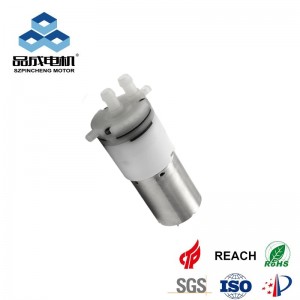
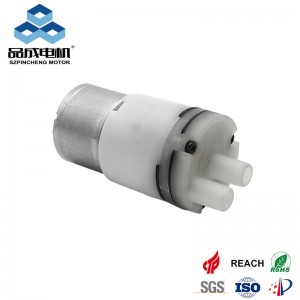
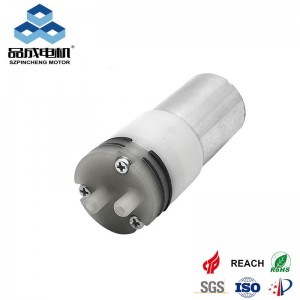
A diaphragm pump uses a motor-driven diaphragm and valve structure. The diaphragm movement changes the volume inside the pump chamber, creating suction at the inlet and pushing liquid through the outlet.
Because of this structure, it can maintain liquid movement when the system contains resistance from tubing, filters, valves or small outlets.
A centrifugal pump uses a rotating impeller to create liquid movement. It is mainly designed for continuous circulation applications where the system requires steady flow with relatively low resistance.
For equipment designers, the choice usually comes down to one question:
Does the system need controlled pressure delivery, or mainly continuous water circulation?
Main Differences Between Diaphragm and Centrifugal Pumps
| Comparison | Diaphragm Pump | Centrifugal Pump |
|---|---|---|
| Working principle | Diaphragm movement with valves | Rotating impeller |
| Main feature | Pressure delivery and flexible installation | Continuous liquid circulation |
| Installation | Suitable for compact equipment | Requires suitable inlet conditions |
| Operation mode | Often used for intermittent cycles | Common for continuous operation |
| Typical applications | Medical, laboratory, appliances, liquid control systems | Cooling and circulation systems |
Why Are Diaphragm Pumps Commonly Used in OEM Equipment?
Many compact products do not simply need water to move from one point to another.
The liquid often needs to pass through a specific path, such as narrow tubing, filters, valves or spray nozzles. These components create resistance, so the pump needs enough force to maintain stable output.
For example, a coffee machine does not need a large amount of water at one time. It needs consistent delivery through the internal brewing system.
A laboratory instrument may only handle a small amount of liquid, but repeatability and stable operation are more important than maximum flow.
This is why diaphragm pump designs are widely used in equipment where space is limited and liquid control is important.
Self-Priming Capability: An Important Selection Factor
Installation position is often a challenge in compact equipment.
The water tank may not be located directly above or beside the pump because of product structure limitations. In these cases, the pump needs to pull liquid through the inlet tube before normal operation.
A suitable self priming diaphragm pump can create this suction function, making it easier to design portable and compact products.
For example, Pinmotor's 370-XA series is designed for pressure-oriented applications:
| Parameter | Reference Value |
|---|---|
| Flow range | 0.3–0.8 L/min |
| Pressure | Up to 130 PSI |
| Suction head | Up to 5 m |
This type of performance is suitable for systems where water passes through tubing, valves or small outlets.
If the liquid supply is already available at the pump inlet, self-priming may not be the main concern. However, it becomes important when the installation position is restricted.
Pressure Delivery and Liquid Control
Different equipment has different liquid requirements.
Some systems need high circulation volume, while others need controlled delivery through a restricted water path.
A high pressure diaphragm pump design is often considered for applications such as:
● Spray equipment
● Cleaning systems
● Sampling devices
● Liquid dispensing modules
The reason is simple: the pump needs to maintain output when resistance exists in the system.
A good selection is not based on the highest rated specification. It should match the actual working condition after the pump is installed in the complete device.
Flow Requirements: When Is Continuous Circulation More Important?
Not every application needs pressure.
Some systems mainly need water to circulate continuously, such as cooling loops or larger liquid circulation systems.
In these cases, circulation-focused pump structures may be more suitable.
The selection difference can be summarized as:
| Requirement | Suitable Direction |
|---|---|
| Controlled liquid delivery | Diaphragm pump |
| Pressure through small tubing | Diaphragm pump |
| Pump installed away from liquid source | Diaphragm pump |
| Continuous circulation | Centrifugal pump |
| Large volume transfer | Centrifugal pump |
Service Life and Maintenance Considerations
Pump reliability depends on the operating environment.
For diaphragm pumps, the main components affected by long-term operation are usually the diaphragm, valves and sealing parts.
For centrifugal designs, rotating components such as impellers and bearings are the main maintenance considerations.
Factors that influence service performance include:
● Working pressure
● Operating frequency
● Liquid characteristics
● Temperature
● Installation method
A correctly selected pump operating within its designed conditions will usually provide better reliability than an oversized model running under unsuitable conditions.
Noise and Vibration in Compact Equipment
Noise is an important consideration for products used near people.
Because diaphragm pumps use mechanical movement, some vibration and pulsation may occur during operation.
Other pump structures using rotating components generally provide smoother liquid movement.
However, the final noise level depends on the complete product design, including:
● Pump mounting
● Housing structure
● Tubing connection
● Motor selection
● Working condition
For OEM products, noise testing should be performed after the pump is installed in the final housing.
Cost and Product Design Considerations
Pump selection should not be based only on unit price.
A lower-cost pump may require additional components or a more complicated system design.
A diaphragm solution may provide advantages when the equipment needs:
● Flexible installation
● Pressure output
● Compact integration
● Controlled liquid movement
For manufacturers, the better choice is usually the pump that helps simplify the complete product design.
Applications of Micro Diaphragm Water Pumps
1、Laboratory and Analytical Equipment
Laboratory systems usually require accurate and repeatable liquid movement.
Compact diaphragm pumps are suitable for applications involving:
● Sample transfer
● Testing systems
● Liquid handling modules
2、Medical and Rehabilitation Equipment
Medical products often have strict requirements for size, reliability and controlled operation.
Small diaphragm pumps can be integrated into systems where liquid needs to be delivered inside limited space.
3、Environmental Monitoring Systems
Monitoring equipment may need to collect or transfer liquid samples from different locations.
Self-priming capability and compact installation can simplify system design.
4、Smart Appliances and Cleaning Equipment
Small appliances often require reliable water delivery inside a limited internal space.
Examples include:
● Coffee machines
● Cleaning devices
● Water dispensing products
Pinmotor Diaphragm Pump Product Range
Pinmotor provides different pump configurations for different equipment requirements.
| Series | Typical Application |
|---|---|
| 030 | Small low-flow devices |
| 280-XA | Higher flow transfer |
| 370 Series | Pressure applications |
| 385-XA | Higher flow self-priming systems |
| 310A-XA | Brushless OEM applications |
Each series is designed for different working conditions. The final selection should be confirmed according to the liquid type, operating cycle, installation structure and actual equipment test.
Frequently Asked Questions
1、What is the advantage of a diaphragm pump?
A diaphragm pump can provide pressure delivery, flexible installation and stable liquid control, making it suitable for many compact OEM products.
2、Is a centrifugal pump always better for high flow?
Not necessarily. Continuous circulation and controlled liquid delivery are different requirements. The correct choice depends on the system design.
3、Can a diaphragm pump work above the water tank?
Yes, if the selected model has suitable suction capability. Actual installation conditions should still be tested.
4、Are diaphragm pumps suitable for laboratory equipment?
Yes. Many laboratory systems need stable liquid movement rather than maximum flow capacity.
Need a Pump Solution for Your Equipment?
For projects requiring special voltage, tubing connection, materials or performance adjustments, Pinmotor provides custom diaphragm pump solutions for OEM applications.
Read More News
Post time: Aug-21-2026