
Send your working pressure, airflow requirement, air chamber volume, inflation time and power supply.
Pinmotor can review the operating conditions and arrange a sample for equipment testing.



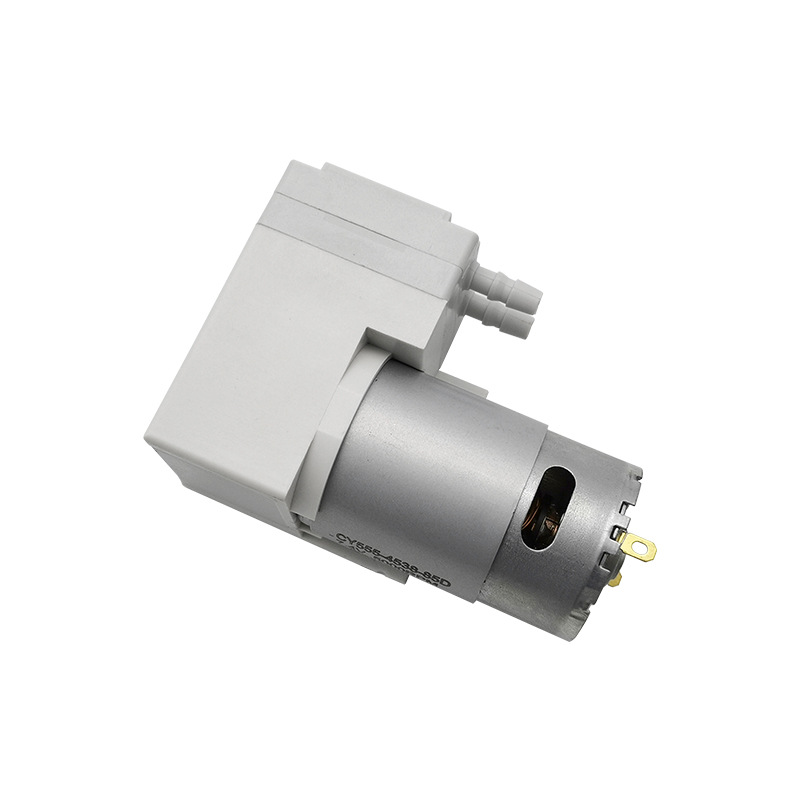
The piston structure gives this pump a different role from smaller diaphragm air pumps.
It is intended for equipment that needs a stronger built-in air source and has enough power and space for a larger piston pump body. The 12 W motor also gives equipment designers more headroom than very small low-power air pumps.
For a pressure application, the pump should be checked at the real working point. Free airflow alone cannot show how the pump performs after the air chamber or pneumatic circuit starts building pressure.
A pressure-flow curve should be used when positive-pressure test data is available.
|
555-XZ Vacuum pump/Position pump |
|||||
| *Other Parameters according to customer demand for design. | |||||
| Rate Voltage | DC 9V | DC 12V | DC 24V | / | / |
| Rate Current | ≤1300mA | ≤1000mA | ≤500mA | ||
| Power | 12w | 12w | 12w | ||
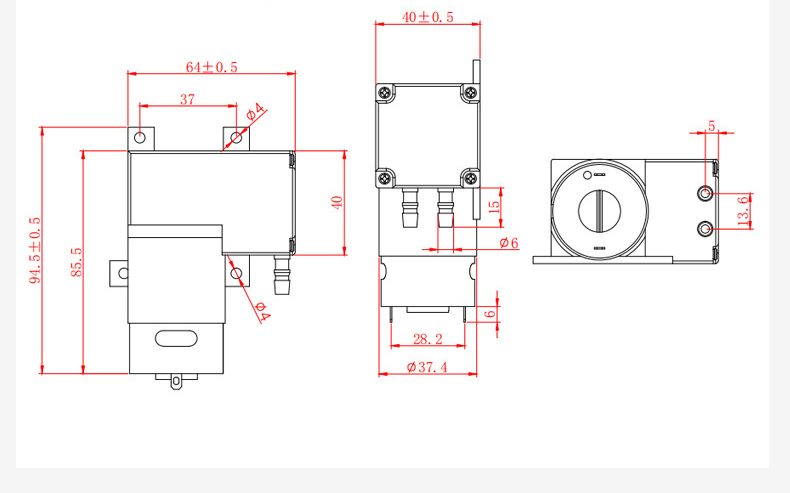
| Air Tap O.D. | φ 6.0mm | ||||
| Vacuum Flow(No load) | 8.0-12.0 LPM | ||||
| Macimum Vacuum | ≤-70Kpa(-525mmHg) | ||||
| Noise Level | ≤75db (30cm away) | ||||
| Life Test | ≥500 hours (keep working) | ||||
| Net Weight | 300g | ||||
The current product sheet provides vacuum-side test data. For pressure-side projects, working pressure and airflow at that pressure should be confirmed during sample testing before the final pump specification is fixed.
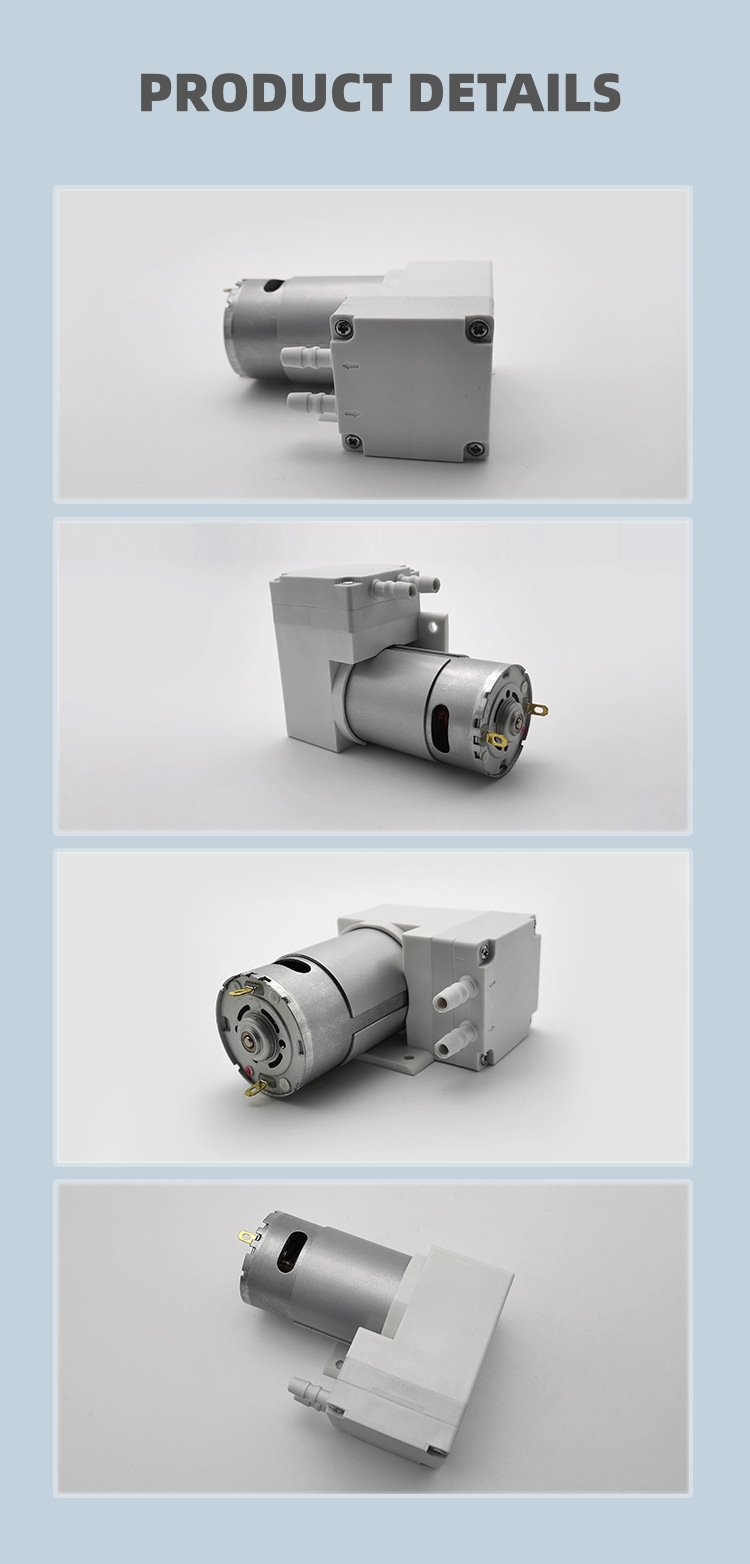
This piston air pump can be used in massage and other compact equipment that needs repeated air filling during operation. Massage equipment is one of the application areas listed in the original product data.
In an inflatable air section, the pump supplies air until the system reaches its required working condition. The air chamber size and filling time directly affect how much airflow the equipment needs.
A larger chamber needs more air. A shorter inflation time needs faster air delivery. The final pump should therefore be tested with the actual air chamber, tubing and control cycle before production.
Selecting a high pressure piston air pump starts with the equipment requirement, not only with motor power or free airflow.
| Project Data | What It Tells Us |
|---|---|
| Working Pressure | Pressure required during normal operation |
| Required Airflow | Air needed while the system is under load |
| Air Chamber Volume | Amount of air that needs to be filled |
| Inflation Time | How quickly pressure must build |
| Power Supply | Correct DC voltage version |
| Duty Cycle | How long and how often the pump runs |
For example, two air systems can use the same working pressure but need different pump capacity if one has a larger air chamber or needs to inflate faster.
Send these conditions with your sample request so the pump can be checked in a circuit close to the final equipment.
Send your working pressure, airflow requirement, air chamber volume, inflation time and power supply.
Pinmotor can review the operating conditions and arrange a sample for equipment testing.
No. Airflow changes as the outlet pressure rises. A pressure application should be checked using airflow at the required working pressure rather than free-flow data alone.
Provide the working pressure, required airflow, air chamber volume, inflation time, power supply and duty cycle. These values are enough for the first sample evaluation.
Choose the rated version that matches the equipment power supply. DC 9V, 12V and 24V are separate rated versions.
The original product data lists a continuous life test of more than 500 hours under defined test conditions. The final duty cycle should still be checked under the actual load and equipment temperature.
