

The Scientific Foundation of Mini Pumps: DC Motors and Fluid Dynamics
1.The Core Role of DC Motors in Micro-Pumps: Power and Speed Control
A Direct Current (DC) motor is the fundamental component that transforms electrical energy into rotational mechanical energy, serving as the primary power source for both DIY and professional micro-pumps. In a pump system, the motor's function is critical: it provides the torque necessary to spin the impeller or drive the displacement mechanism. The relationship between the motor's rotational speed (RPM) and the pump's performance is direct and significant. Higher RPM generally translates to increased flow rate and head pressure (the maximum height the pump can lift water). Understanding this relationship is the first step in both building a functional DIY pump and selecting a professional unit.
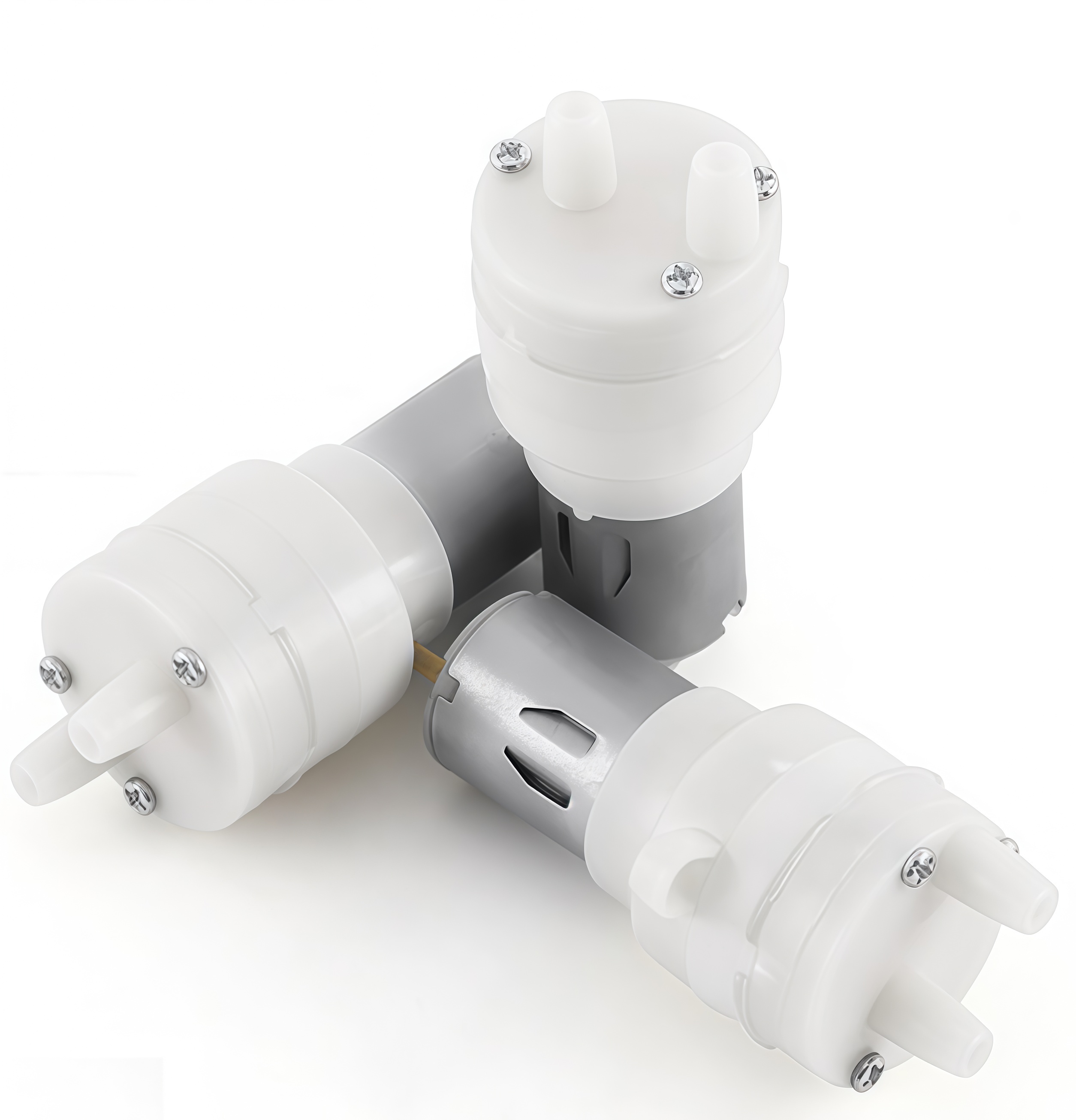
The Working Principle of a DIY Pump: A Simplified Centrifugal Model
Most DIY water pumps constructed with a DC motor operate on the principle of a centrifugal pump. This mechanism relies on a rotating component, the impeller, which imparts kinetic energy to the fluid.
1.Impeller Rotation: The motor spins the impeller at high speed.
2.Centrifugal Force: This rotation forces the water outwards from the center of the impeller towards the pump casing (volute).
3.Pressure Conversion: As the water moves outwards, its velocity increases. The design of the casing then converts this high-velocity flow into high pressure, pushing the water out through the discharge port. The success of a DIY design hinges on two critical factors: the precise design of the impeller blades and the watertight integrity of the pump casing. The DIY project serves as an invaluable, hands-on method for grasping these core fluid dynamics principles.
2.Building a DC Motor Mini Water Pump: A Detailed Step-by-Step Guide
Constructing a mini water pump is an accessible project that requires careful attention to detail, particularly regarding sealing and alignment.
Materials Checklist: DC Motor, Impeller, Casing, and Power
Gathering the correct materials is essential for a successful and safe build. Essential Materials:
•DC Motor: Low-voltage options (3V, 5V, or 12V) are recommended. The choice of voltage depends on the desired power and the available power supply.
•Impeller Material: Durable plastic or even thin metal sheets.
•Pump Casing: Small plastic container, PVC fittings, or 3D-printed parts.
•Tubing: Flexible tubing for inlet and outlet.
•Power Supply: Battery pack or regulated DC power adapter.
•Sealing Materials: O-rings, silicone sealant, or waterproof epoxy.
Core Component Fabrication: Precision in Impeller and Casing
The performance of the pump is determined by the synergy between the impeller and the casing.
•Step 1: Impeller Fabrication: The impeller must be symmetrical and balanced to prevent vibration. Ensure the central hole perfectly matches the diameter of the DC motor shaft for a secure fit.
•Step 2: Casing Construction: Design the casing with a tight fit around the impeller to maximize efficiency. The inlet should be near the center of the impeller, and the outlet should be tangential to the casing's edge to capture the high-velocity water flow.
•Step 3: Motor Waterproofing: This is the most critical step. The point where the motor shaft penetrates the pump casing must be perfectly sealed. Utilizing a small O-ring or a generous application of waterproof epoxy or silicone sealant is necessary to prevent water ingress, which would quickly destroy the motor.
Assembly, Testing, and Safe Connection
With the components ready, the final assembly requires precision and safety checks.
•Impeller-Shaft Fixation: Securely bond the impeller to the motor shaft using strong adhesive or a set screw, ensuring it is centered and does not wobble.
•Casing Sealing: Use waterproof sealant or bolts to join the two halves of the pump casing, guaranteeing a complete seal.
•Power Connection and Test: Connect the motor to the power source. Before submerging, ensure the motor spins freely. Then, prime the pump (if necessary) and test it with water, checking for leaks and flow rate.
Practical Advice and Upgrades: From DIY to Professional Application
The DIY pump provides valuable insight, but its limitations highlight the necessity of professional engineering for demanding tasks.
Tips for Maximizing DIY Pump Performance
To push the limits of your homemade pump, consider these upgrades:
•Impeller Design Optimization: Experiment with different blade counts and angles. Even small adjustments can significantly alter the pump's characteristic curve (flow vs. head).
•Motor Efficiency: Upgrade to a higher-quality DC motor or, for advanced builders, a Brushless DC (BLDC) motor, which offers superior efficiency and lifespan.
•Improved Sealing: Invest in professional-grade shaft seals or magnetic couplings to drastically improve reliability and longevity. mini pumps
When is a Professional Micro-Pump Necessary?
While the DIY pump is fun, it cannot replace a professionally engineered unit in applications requiring:
•Precision Control: Medical dosing, chemical analysis, or laboratory work where flow must be controlled to within microliters.
•High Reliability and Longevity: Industrial applications or consumer products requiring thousands of hours of continuous, maintenance-free operation.
•Specific Performance Metrics: When the application demands a high pressure (head) or a specific flow rate that cannot be achieved with recycled materials. Professional pumps are characterized by certified metrics like flow curves, head pressure, noise levels, and IP ratings.
The Advantage of Professional Micro-Pumps: The Pincheng Motor Example
Companies like Pincheng Motor specialize in the seamless integration of micro-pumps and DC motor technology. Their products are engineered to overcome the inherent flaws of DIY construction. Professional micro-pumps leverage advanced DC motor drive technology and precision-molded pump bodies to deliver:
•Precision Fluid Handling: Essential for medical devices and analytical instruments.
•Quiet Operation: Crucial for smart home appliances and personal care products.
•Guaranteed Performance: Reliable flow and pressure over the product's lifespan, backed by rigorous testing. By understanding the principles through DIY, users can better appreciate the immense value and necessity of professional solutions in critical applications.
Conclusion and Safety Reminders
The Educational Takeaway and Safe Practices The DC motor mini water pump project is an excellent educational tool for understanding the conversion of electrical energy to fluid power. Always prioritize safety: use low-voltage power, ensure all wiring is secure and insulated, and never run the motor dry for extended periods, as this can cause overheating and damage.
Call to Action: Advancing Beyond DIY
We encourage you to apply the knowledge gained here to more complex projects. To explore the professional-grade components that power the world's most advanced micro-fluidic systems, we invite you to consult with experts in the field, such as Pincheng Motor, to find the perfect integrated micro-pump and DC motor solution for your high-performance needs.
Recommend products
Read More News
Post time: Dec-16-2025