

The Power Source: How Does a Mini Pump "Get Moving"?
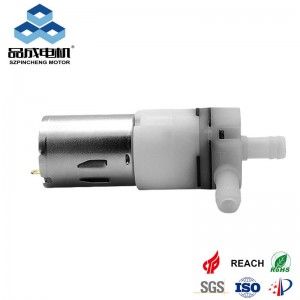
At its core, a mini water pump is a device designed to move fluid, and its operation begins with its power source. Simply put, a mini pump is primarily driven by a micro DC motor, acting much like the engine in a car.
The motor's essential function is to convert electrical energy into rotational motion. This rotation then drives the internal components of the pump—be it an impeller, a diaphragm, or rollers—to physically push the water. The speed of the motor directly influences the pump's performance, specifically its flow rate (how much water it moves) and head (how high it can push the water).
Two Ways to Move Water: Dynamic vs. Positive Displacement
Mini pumps use one of two fundamental methods to move fluid, each suited for different tasks:
1.Dynamic (Kinetic) Pumps (The "Spin Cycle"): These pumps, mainly micro-centrifugal pumps, use a rapidly spinning impeller to "fling" the water outwards, much like a washing machine's spin cycle. They are ideal for applications requiring high flow rates but lower pressure, such as circulating water in a fish tank or a cooling system.
2.Positive Displacement Pumps (The "Syringe"): These pumps, including diaphragm and peristaltic pumps, move a fixed volume of fluid with each cycle by physically squeezing or changing the size of a chamber. They are perfect for applications requiring precise metering and higher pressure, such as in medical devices or sprayers.
A Simple Comparison of Three Common Mini Pump Types (Learning)
Understanding the three most common types of micro-pumps is key to selecting the right one for your needs.
Centrifugal Pumps: The High-Volume Workhorse
•Working Principle: A spinning impeller creates centrifugal force, pushing water from the center outward and converting velocity into pressure.
•Advantages: Simple structure, high flow rate.
•Common Uses: Computer liquid cooling, small fountains, submersible pumps for aquariums.
Diaphragm Pumps: Precision and Dry-Running Capability
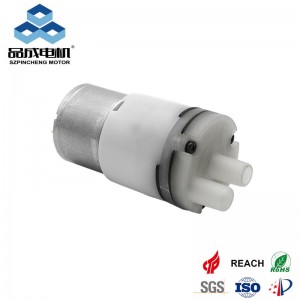
•Working Principle: A flexible diaphragm moves back and forth (reciprocating motion), like a heart, to draw fluid in and push it out, controlled by one-way valves.
•Advantages: Self-priming, can run dry (empty), excellent for precise metering.
•Common Uses: Coffee machines, medical analyzers, misting systems.
Peristaltic Pumps: The Contamination-Free Choice
•Working Principle: Rollers squeeze a flexible tube, pushing the fluid along like squeezing toothpaste from a tube.
•Advantages: The fluid only touches the tube, ensuring zero contamination and extremely high metering accuracy.
•Common Uses: Laboratory analysis, food and beverage dispensing.
How to Choose and Buy the Right Mini Pump (Choosing/Buying)
Selecting the correct pump requires matching its capabilities to your specific application needs.
Three Key Selection Factors: Flow, Head, and Fluid Type
•Flow Rate: How much water do you need to move? (High volume requires Centrifugal; precise amounts require Diaphragm/Peristaltic).
•Head (Pressure): How high or far does the water need to be pushed? (Higher pressure often requires Diaphragm).
•Fluid Type: Are you pumping clean water, corrosive chemicals, or a sensitive liquid that must remain uncontaminated?
Expert Advice: Why Choose a Professional Solution Like Pincheng Motor?
While simple pumps are widely available, professional applications demand superior quality. Companies like Pincheng Motor specialize in micro-pump and motor integration, offering solutions that far surpass standard consumer-grade products.
Professional products offer significant advantages in longevity, noise reduction, and performance stability. For instance, Pincheng's micro-pumps are used in critical medical equipment where high reliability is non-negotiable.
Conclusion
Summary: Micro-Pumps Make Life Smarter
Micro-pumps are tiny powerhouses essential for modern technology, enabling everything from precise medical treatments to efficient home appliances. By understanding the basic principles of dynamic and positive displacement pumping, you are better equipped to select the right tool for your project.
Call to Action: Get Professional Fluid Control Support
If your application requires high precision, long-term reliability, or custom specifications, we invite you to consult with experts in the field. Contact Pincheng Motor for tailored fluid control solutions that meet the demanding standards of medical, smart home, and industrial applications.
Recommend products
Read More News
Post time: Dec-17-2025