

By: Technical Engineering Team at Pinmotor | Updated: Feb 4, 2026
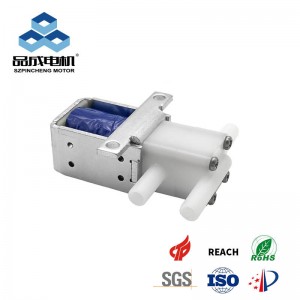
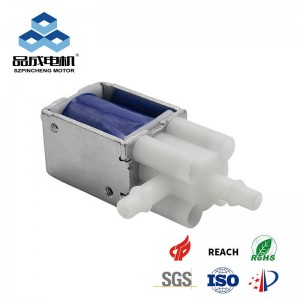
If you’ve ever used a high-end espresso machine or a portable medical nebulizer, you’ve relied on a mini water solenoid valve. These tiny components are the unsung heroes of modern automation, acting as the "brain" that tells liquids exactly when to move and when to stop.
In an industry where a 0.5mm difference can cause a system failure, how do you choose the right tech? Based on our decade of manufacturing experience at Pinmotor, here is our definitive guide to micro-fluidic control.
1. How It Works (Without the Jargon)
Think of a mini solenoid valve as an electric gatekeeper:
- The Signal: Your device sends a small electrical pulse (12V/24V) to a copper coil.
- The Magnet: This creates a magnetic field that lifts a precision-ground metal plunger.
- The Flow: The "gate" opens instantly, allowing liquid to pass through the orifice.
- The Reset: When power is cut, a stainless steel spring snaps the gate shut.
Why this matters: These transitions happen in less than 20 milliseconds, providing the extreme precision needed for medical dosing or lab titration.
2. Why "Mini" is Winning: A Comparison
Space is at a premium in modern design. We’ve seen a 40% increase in requests for smaller footprints over the last three years.
| Feature | Mini Solenoid Valves | Standard Valves |
|---|---|---|
| Size | Compact (e.g., 15–30mm) | Industrial (50mm+) |
| Power Use | Ultra-low (<1W); Battery friendly | High; Requires AC mains |
| Response | Instant (15-25ms) | Slower (1-3 seconds) |
3. Pro-Tips from the Pinmotor Lab
In our stress-testing facility, we look at real-world failure points that don't always appear on a spec sheet:
- The "Hard Water" Headache: Mineral buildup (limescale) is the #1 killer of valves. We use EPDM seals in our PYF series to extend service life in appliances like steam mops.
- Heat Management: For battery-powered IoT devices, we recommend Latching Solenoids. They only use power for a split second to switch states, preventing heat buildup.
4. Built to Last: Our Quality Promise
If our valve fails, your reputation fails. Every Pinmotor component undergoes:
- 1.2 Million Cycle Testing: We simulate 10 years of use before release.
- 100% Leak Testing: Every unit is pressure-tested on the assembly line.
- Certifications: Our materials are FDA-compliant and RoHS certified.
5. Frequently Asked Questions
Q: Can these handle hot water?
A: Yes. Our standard models handle up to 80°C (176°F). For boiling water, we offer custom high-temp silicone internals.
Q: Which voltage is best?
A: 12V DC is the standard for electronics, while 24V is preferred for industrial environments to reduce signal noise.
you like also all
Read More News
Post time: Aug-12-2025