

In the rigorous landscape of In-Vitro Diagnostics (IVD) and Point-of-Care Testing (POCT), the micro diaphragm pump functions as the critical circulatory system of the instrument. Selecting a sub-optimal fluidic component does not merely jeopardise performance; it introduces catastrophic risks regarding FDA/CE regulatory pathways and long-term clinical reliability.
This guide delineates the technical imperatives for integrating medical-grade pumps, featuring high-performance solutions from PinMotor’s ISO-certified portfolio.
Application-Specific Performance Matrices
The fluidic demands of a diagnostic instrument are dictated by its clinical modality. Selecting a pump requires a granular understanding of flow precision and pulsatile characteristics.
Regulatory Compliance & Material Biocompatibility
For medical OEM integration, compliance is the non-negotiable baseline. In accordance with ISO 13485 quality management systems, every fluid-contacting component must undergo rigorous validation.
The Biocompatibility Imperative
Components such as diaphragms and valves must adhere to ISO 10993 standards. PinMotor utilises medical-grade TPV (Thermoplastic Vulcanisate) and FFKM (Perfluoroelastomer) to ensure zero particulate shedding and chemical inertness. This prevents analyte contamination, which is vital for the integrity of molecular assays.
Mandatory Certifications Checklist:
-
FDA 510(k) Clearance & CE Marking: Essential for global market access.
-
RoHS & REACH Compliance: Ensuring the absence of hazardous substances in electronic assemblies.
-
Traceability: Full lot-traceability of raw materials to mitigate recall liabilities.
Engineering Spotlight: PinMotor’s Medical-Grade Innovations
The 370-XA Brushless Advantage
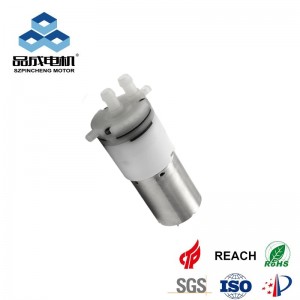
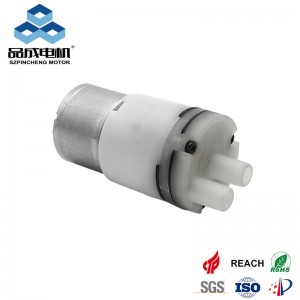
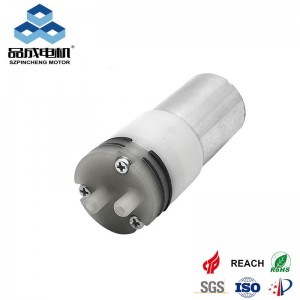
For high-throughput laboratory analysers, the 370-XA Brushless DC (BLDC) pump represents the pinnacle of reliability.
-
Longevity: Engineered for an MTBF (Mean Time Between Failures) exceeding 20,000 hours.
-
Contamination Control: The brushless design eliminates carbon dust, ensuring a sterile environment for PCR and NGS platforms.
-
Control Precision: Sophisticated PWM (Pulse Width Modulation) speed control allows for a dynamic flow range with minimal deviation.
The 370C Self-Priming Series
Specifically designed for liquid handling in urine and blood chemistry, the 370C offers:
-
Self-Priming Capability: Efficiently handles air-liquid segments without losing prime, up to 2 metres.
-
Quiet Operation: Noise levels suppressed below 55dB, crucial for near-patient testing environments.
Mitigating Integration Risks: A Systematic Framework
Experienced R&D engineers avoid the "Unit Price Trap", focusing instead on the Total Cost of Ownership (TCO).
-
Requirement Definition (14 Days): Establish flow rates, duty cycles, and sterilisation protocols (e.g., Ethylene Oxide or Autoclaving).
-
Material Compatibility Verification: Conduct 30-day immersion tests with specific reagents to prevent elastomer degradation.
-
Reliability Testing: PinMotor samples undergo rigorous 8,000-hour endurance trials to validate performance stability under load.
Conclusion: Why Partner with PinMotor?
As a premier China-based manufacturer with a global footprint, PinMotor bridges the gap between cost-efficiency and uncompromising medical standards. Our facilities are IATF 16949:2016 certified, ensuring that every micro pump delivered to your assembly line meets the stringent requirements of the modern diagnostic suite.
Optimise Your Fluidic Architecture Today
Accelerate your product's time-to-market with PinMotor’s validated fluidic solutions.
-
Consult an Application Engineer: [Enquire for Custom BLDC Solutions]
-
Sample Procurement: [Order ISO 10993 Compliant Samples]
Recommend products
Read More News
Post time: Feb-25-2026