

In the micro fluid control sector, the term "Micro DC Pump" is often used broadly, but it typically refers to a pump driven by a brushed DC motor. The Micro Brushless DC (BLDC) Pump, however, represents a distinct and technologically superior category. While both types are compact and operate on direct current, the core difference lies in the motor's commutation technology—the mechanism that keeps the motor rotating—which profoundly impacts performance, lifespan, and overall system cost. Understanding this fundamental distinction is essential for engineers selecting the optimal component for their application.
Technical Core: Fundamental Difference in Commutation Mechanism
The most significant difference between the two pump types is how the motor manages the flow of current to maintain continuous rotation.
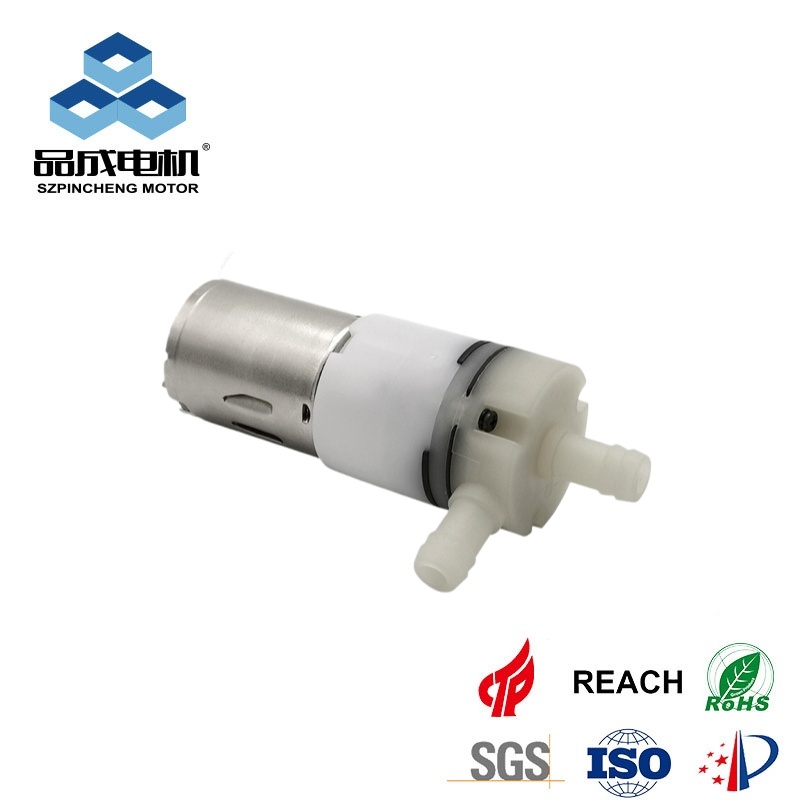
Micro Brushed DC Pump
The brushed DC pump relies on a traditional, mechanical method for current switching.
Mechanical Commutation
This type of pump uses a commutator and carbon brushes to physically switch the direction of the current in the motor's windings. As the rotor spins, the brushes make and break contact with the commutator segments, ensuring the magnetic field is always pushing the rotor forward.
Structural Characteristics
The design is simple and cost-effective to manufacture. However, the physical contact points are inherent wear items, limiting the pump's lifespan and reliability.
Micro Brushless DC Pump (BLDC)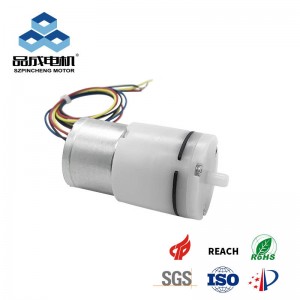
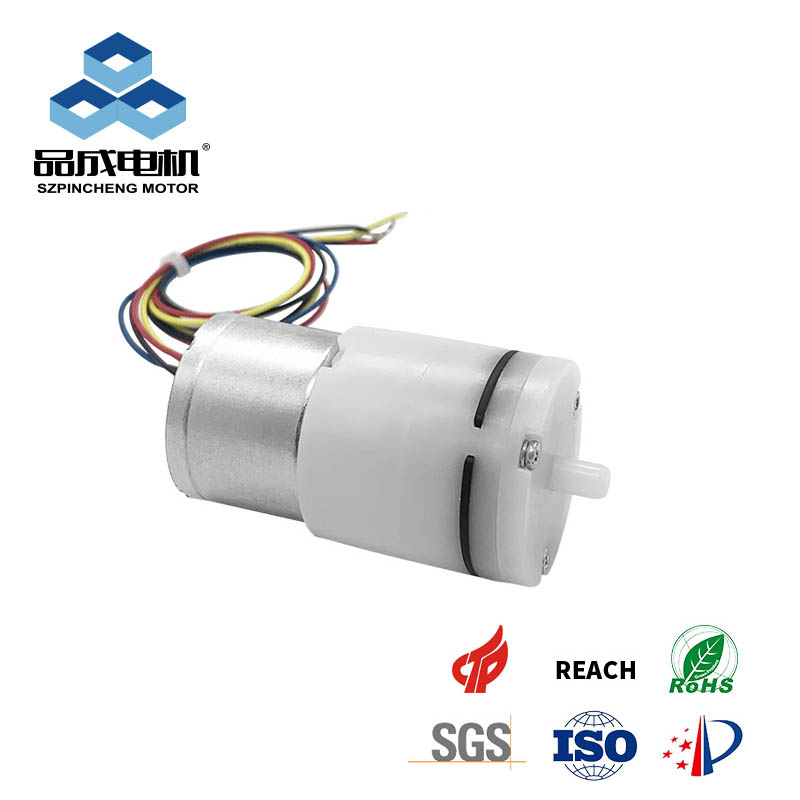
The BLDC pump utilizes an advanced electronic system for commutation.
Electronic Commutation
The BLDC motor replaces the mechanical brushes and commutator with an integrated electronic circuit board (PCB). This circuit uses sensors (or sensorless algorithms) to detect the rotor's position and electronically switch the current to the stator windings.
Structural Characteristics
This design is more complex and has a higher initial cost due to the required electronics. Crucially, it eliminates all mechanical wear points associated with commutation, leading to superior longevity and reliability.
Performance Comparison: Key Metrics Affecting Application
The difference in commutation technology results in a stark contrast across critical operational metrics.
|
Metric
|
Micro Brushed DC Pump
|
Micro Brushless DC Pump (BLDC)
|
|---|---|---|
|
Commutation
|
Mechanical (Brushes/Commutator)
|
Electronic (PCB/Sensors)
|
|
Lifespan
|
Limited (Carbon brush wear)
|
Extended (Limited by bearing life)
|
|
Efficiency
|
Lower (Friction loss)
|
Higher (Minimal friction loss)
|
|
Noise/Heat
|
Higher (Mechanical friction/arcing)
|
Lower (Smooth electronic control)
|
|
Control
|
Basic (Voltage-dependent)
|
Precise (PWM/Closed-loop capable)
|
|
Initial Cost
|
Lower
|
Higher
|
Lifespan and Reliability
Lifespan Comparison
The lifespan of a BLDC pump far exceeds that of a brushed pump. The continuous friction and wear of the carbon brushes in a brushed pump mean its operational life is inherently limited. PinMotor's BLDC micro pumps, by contrast, are designed for long-term, continuous operation, with lifespan primarily determined by the highly durable bearings.
Failure Modes
Brushed pumps typically fail due to the complete wear of the carbon brushes. BLDC pumps are significantly more reliable, with failure modes generally related to external factors or the eventual end-of-life of the bearings.
Efficiency and Energy Consumption
Energy Efficiency
BLDC pumps are significantly more energy-efficient. The elimination of mechanical friction means less energy is wasted as heat, allowing more of the electrical input to be converted into hydraulic work. This is a critical factor for battery-powered devices and applications focused on minimizing power consumption.
Heat and Noise
The smooth, non-contact operation of the BLDC motor results in lower operational noise and reduced heat generation, making them suitable for noise-sensitive environments and applications where thermal management is a concern.
Control and Precision
Speed Control
BLDC pumps offer superior control. They can be precisely regulated using Pulse Width Modulation (PWM), allowing for linear and dynamic adjustment of flow rate. This precision is essential for applications requiring accurate fluid metering, such as in analytical or medical instruments.
Stability
The electronic control of BLDC motors ensures a more stable output, with less flow and pressure fluctuation compared to the mechanical switching inherent in brushed motors.
Selection Decision: PinMotor's Recommended Applications
The choice between the two technologies should be a strategic decision based on the application's priorities.
Applicable Scenarios for Brushed Pumps
Cost-Priority and Short-Term Applications
Brushed pumps are best suited for applications where the initial cost is the overriding factor, and the pump is expected to operate intermittently or for a limited lifespan, such as in certain low-cost consumer products.
Applicable Scenarios for BLDC Pumps (PinMotor's Focus)
Critical and Long-Term Operation
BLDC pumps are the definitive choice for mission-critical applications where reliability, precision, lifespan, and low noise are paramount. This includes the high-standard sectors PinMotor specializes in: medical devices, industrial automation, and high-end smart home systems.
Conclusion: The Trade-off from Cost to Value
While the micro brushed DC pump offers a lower initial cost, the micro BLDC pump provides a superior value proposition. The BLDC pump's advantages—including low Total Cost of Ownership (TCO) due to minimal maintenance, high reliability, and excellent performance—make it the preferred, future-proof technology for any high-performance micro fluid control system.
Recommend products
Read More News
Post time: Jan-05-2026