

In the precision-driven worlds of water treatment, medical diagnostics, and laboratory automation, the accuracy of chemical dosing can determine the success of an entire process. When selecting a micro-pump, engineers must often choose between two core technologies: Micro Diaphragm pump and Micro Peristaltic pump.
This engineering-focused guide compares these technologies to help you select the ideal PinMotor solution for your specific dosing requirements.
The 3 Non-Negotiable Criteria for Dosing Excellence
Whether you are injecting chlorine or dispensing reagents into a diagnostic cartridge, your pump must meet these standards:
-
Accuracy and Repeatability: Consistent delivery over thousands of cycles.
-
Chemical Compatibility: Resistance to corrosion from aggressive chemicals.
-
Reliability: Predictable maintenance to minimize system downtime.
Comparison at a Glance: Which Fits Your System?
| Feature | Micro Diaphragm Pump |
Micro Peristaltic Pump
|
| Max Pressure | High (Up to 200+ kPa) | Low (< 100 kPa) |
| Precision | Good (Stroke-based) |
Excellent (Rotation-based)
|
| Fluid Isolation | Wetted parts (Valves/Diaphragm) |
Total Isolation (Tubing only)
|
| Maintenance | Low (Long-life components) |
Moderate (Tube changes)
|
| Best For | Pressurized Industrial Systems |
Sterile Labs & Low-Flow Reagents
|
Deep Dive: Micro Diaphragm Pumps
The High-Pressure Workhorse
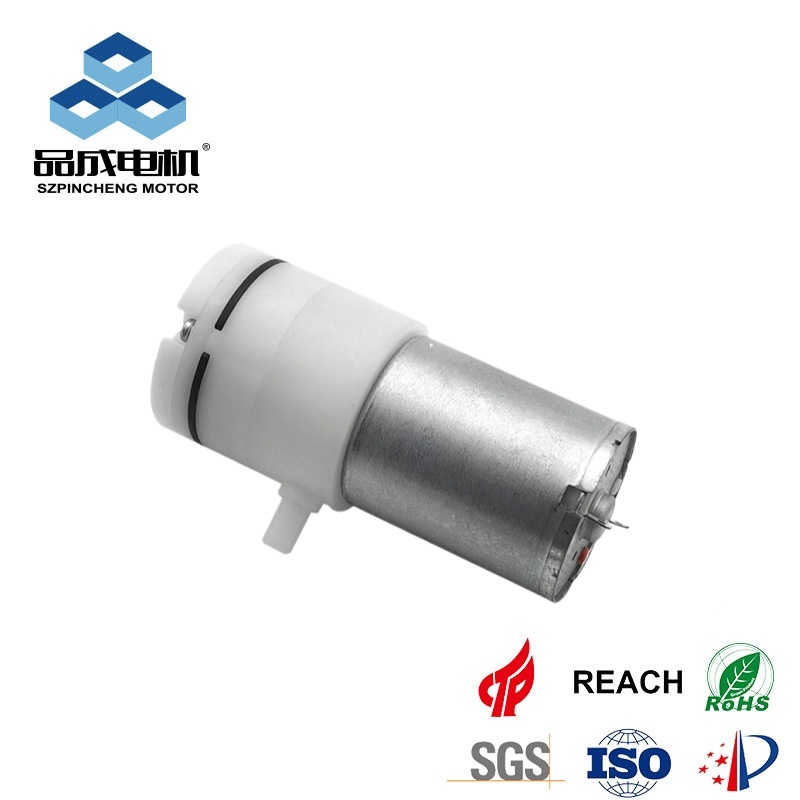
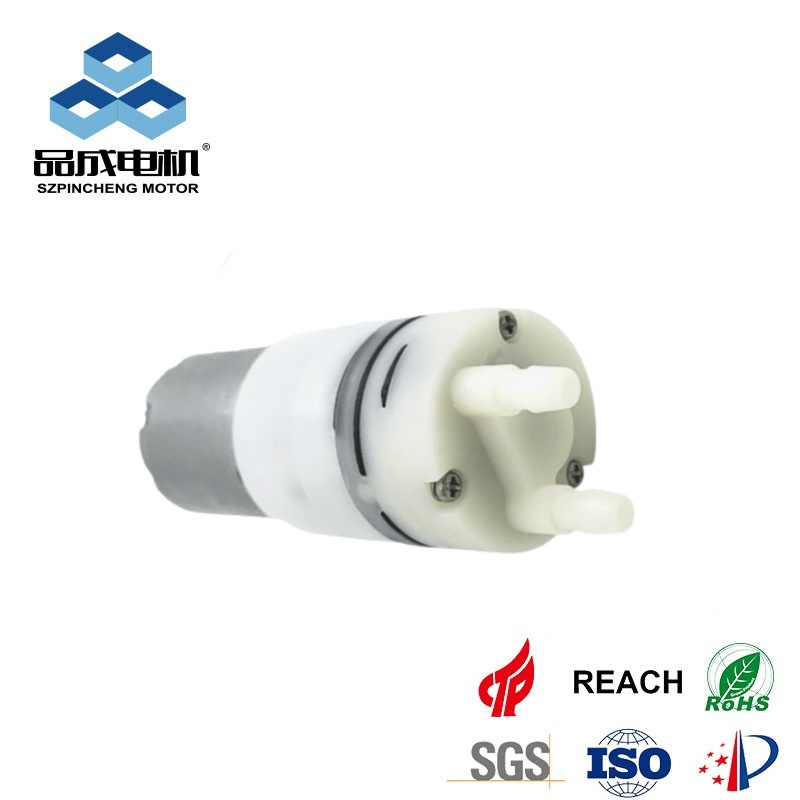
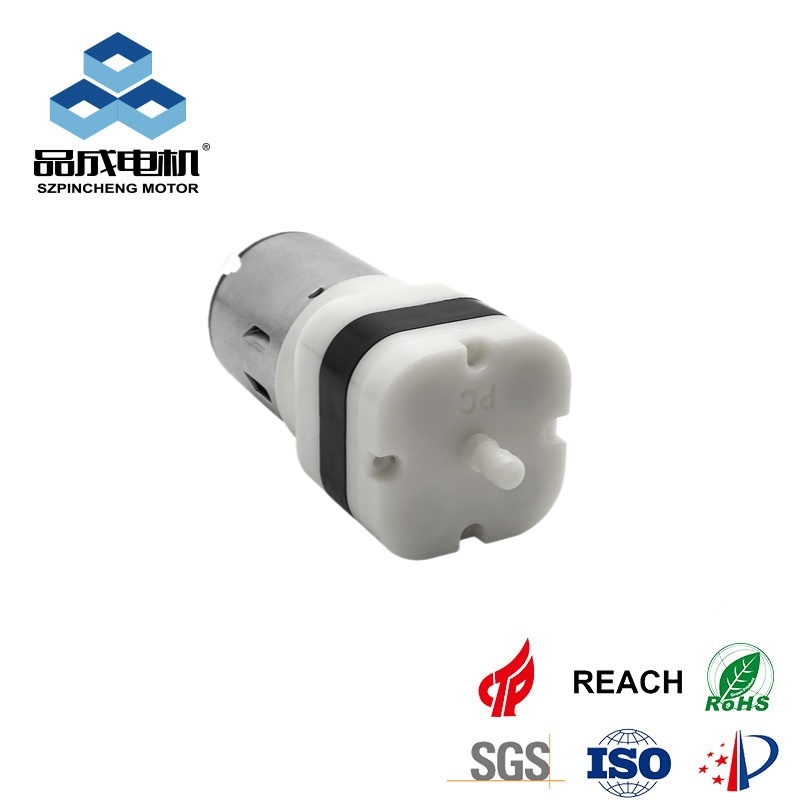
Micro diaphragm pumps operate via the rapid oscillation of a flexible membrane. This design is the industry standard for robust, high-pressure applications.
-
Superior Discharge Pressure: Capable of exceeding 200 kPa, making them ideal for injecting chemicals into pressurized water mains or industrial boilers.
-
Engineered Longevity: With fewer moving parts in contact with fluid, PinMotor’s diaphragm pumps offer thousands of hours of service with minimal drift.
-
Material Customization: Wetted parts can be tailored with PTFE, FKM, or EPDM to handle highly corrosive chemicals.
Engineering Note: Diaphragm pumps produce a pulsating flow. For ultra-smooth delivery, PinMotor recommends integrating a pulsation dampener.
Deep Dive: Micro Peristaltic Pumps
The Gold Standard for Purity and Precision
Peristaltic pumps use rotating rollers to "milk" fluid through a flexible tube.
-
Extreme Volumetric Accuracy: Since volume is directly proportional to motor rotation, these are ideal for precise laboratory dispensing.
-
Zero Contamination: The fluid never leaves the tubing, ensuring total isolation. This is critical for sterile medical diagnostics and high-purity chemical dosing.
-
Tool-Free Maintenance: The tubing is the only wear part. Replacing it is a simple process that restores the pump to "like-new" condition instantly.
Decision Matrix: Selecting Your PinMotor Solution
Choose a PinMotor Diaphragm Pump if:
-
You need to inject chemicals into a pressurized system.
-
You require a long-term, maintenance-free industrial solution.
-
The chemical is highly aggressive, requiring customized material durability.
Choose a PinMotor Peristaltic Pump if:
-
Your application requires extremely high precision for small volumes.
-
The fluid is sterile, high-purity, or sensitive to contamination.
-
The system operates at low pressure and requires easy field serviceability.
PinMotor’s Quality Guarantee: 100% EOL Testing
To ensure the reliability of your dosing system, every PinMotor pump undergoes 100% End-of-Line (EOL) testing. We verify the P-Q Curve (Pressure vs. Flow rate) for every unit to ensure it performs exactly as designed before it reaches your facility.
Ready to optimize your dosing system? [Contact PinMotor Technical Team]
Recommend products
Post time: Jan-28-2026